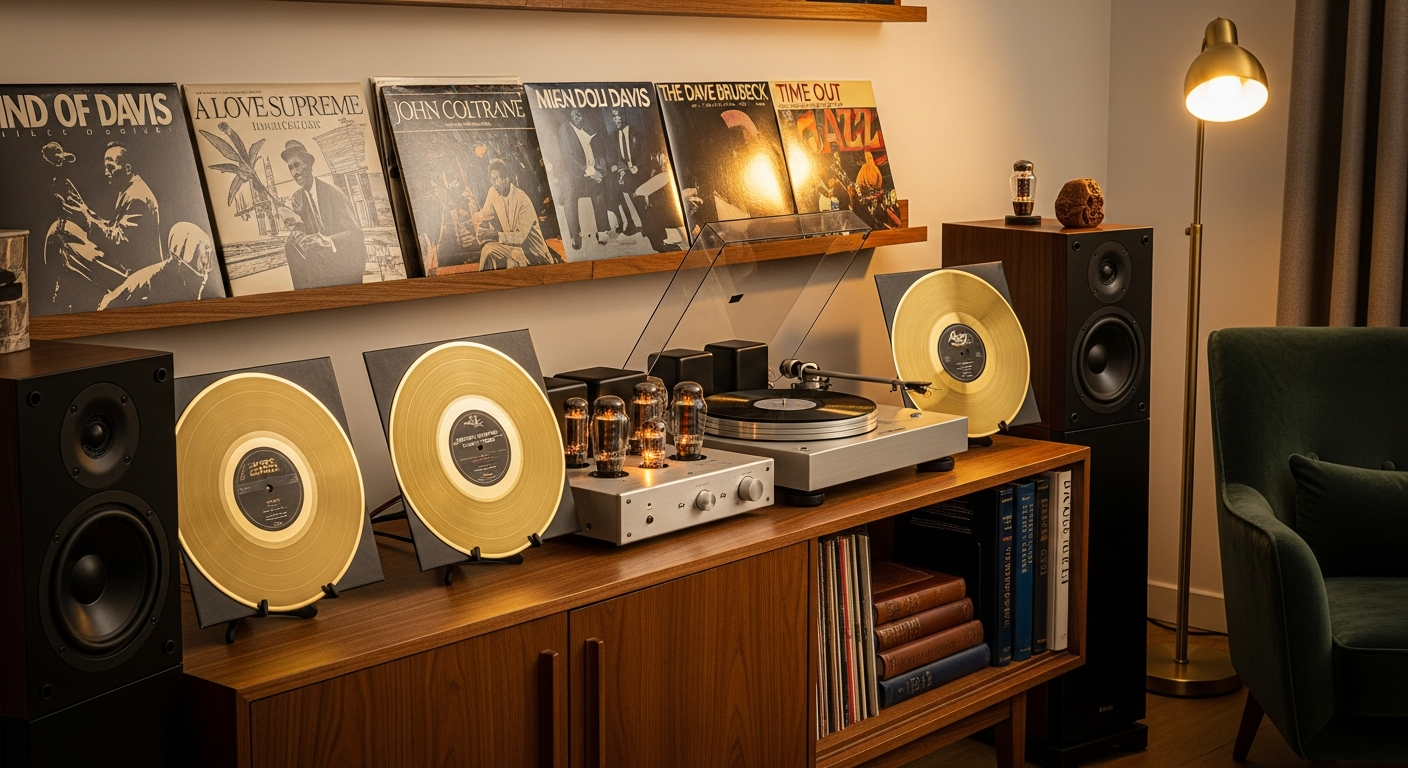
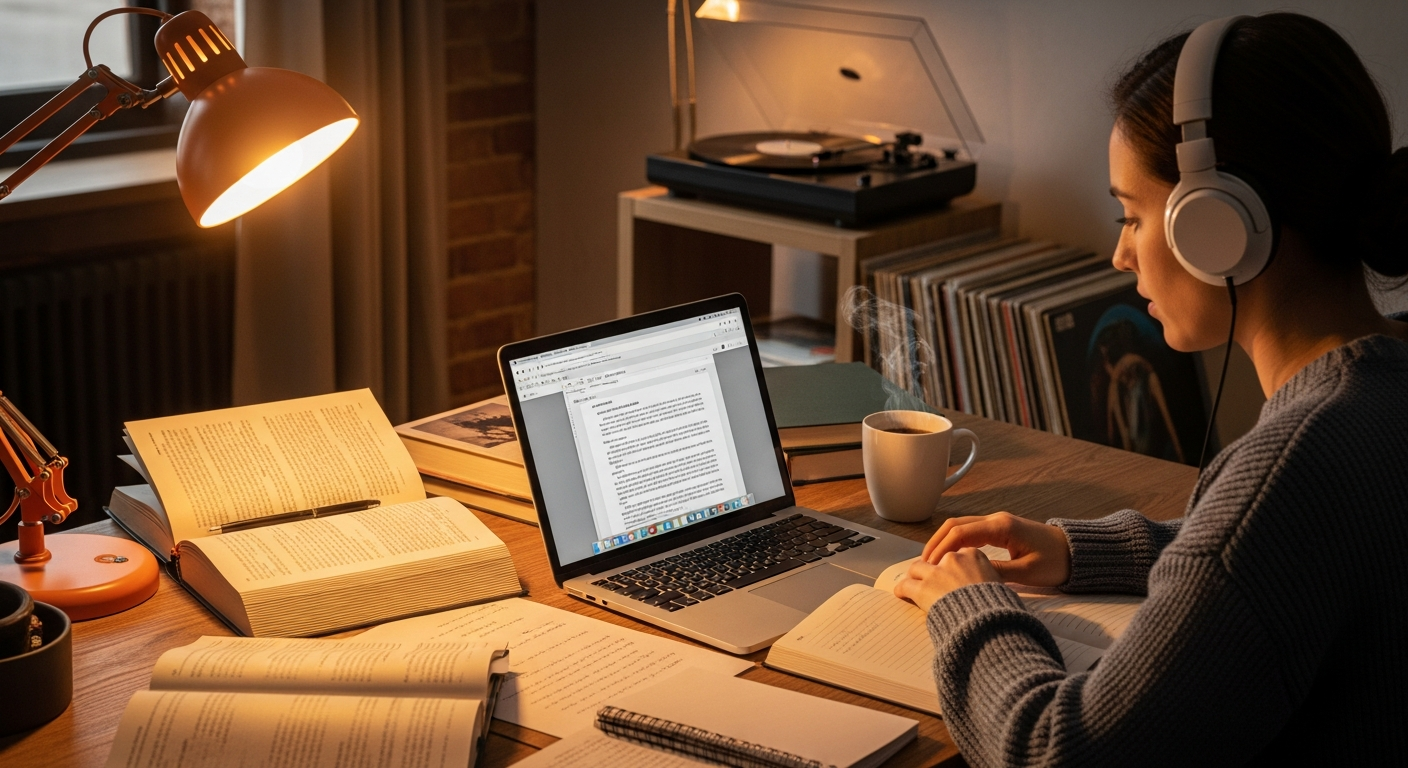
You are sitting at your desk with three hours of work ahead of you. Silence feels oppressive. Pop music is distracting — you catch yourself singing along instead of reading. Lo-fi hip-hop beats are fine but monotonous. What you need is music that is complex enough to keep your mind from wandering, gentle enough to stay in the background, and beautiful enough to make the hours feel shorter.
You need jazz.
Why Jazz Works for Studying
Jazz occupies a unique sweet spot in the musical spectrum. It is more harmonically complex than ambient music or lo-fi beats, which means it engages your brain's pattern-recognition systems and prevents the boredom that leads to distraction. But unlike pop or rock, instrumental jazz has no lyrics to compete with your reading, and unlike classical music, it rarely has dramatic crescendos or sudden changes that jolt your attention.
Research supports this. A 2012 study published in the Journal of Consumer Research found that moderate ambient noise (around 70 dB — roughly the volume of a café) enhanced creative thinking compared to both silence and loud noise. Instrumental jazz at background volume fits this profile precisely.
The key is choosing the right type of jazz. Not all jazz is study-friendly. Here is what works and what does not.
What to Listen To
Piano Trio Jazz
The gold standard for study music. Piano trio recordings (piano, bass, drums) produce a warm, enveloping sound that fills a room without dominating it. The interplay between the three instruments creates enough variety to keep your brain engaged, while the absence of horns and vocals keeps the energy level manageable.
Essential albums:
- Bill Evans — Waltz for Debby (1961): The definitive study album. Evans's touch is delicate, the melodies are gorgeous, and the overall mood is one of gentle, focused beauty.
- Ahmad Jamal — Live at the Pershing (1958): Understated, elegant, and spacious. Jamal uses silence as effectively as notes, creating a breathing, meditative quality.
- Oscar Peterson — We Get Requests (1964): Slightly more energetic than Evans or Jamal, but Peterson's virtuosity is so smooth that it enhances rather than disrupts concentration.
- Brad Mehldau — Elegiac Cycle (1999): Solo piano of quiet intensity. Modern, contemplative, and perfect for late-night study sessions.
Cool Jazz
Cool jazz emerged in the 1950s as a relaxed, understated alternative to the intensity of bebop. Its gentle tempos, soft dynamics, and lyrical melodies make it ideal background music.
Essential albums:
- Chet Baker — Chet Baker Sings (1954): An exception to the 'no vocals' rule — Baker's voice is so quiet and intimate that it functions almost as another instrument.
- Modern Jazz Quartet — Django (1956): Chamber jazz of exquisite refinement. Like having a string quartet in your study, but with swing.
- Stan Getz — Getz/Gilberto (1964): Bossa nova jazz at its most relaxed. The Brazilian rhythms and gentle saxophone create a warm, productive atmosphere.
Modal and Ambient Jazz
Modal jazz's long, sustained harmonies create a meditative quality that is perfect for deep focus work.
Essential albums:
- Miles Davis — Kind of Blue (1959): Spacious, meditative, and universally loved. The most recommended study album in jazz.
- Miles Davis — In a Silent Way (1969): Ambient jazz before ambient music existed. Hypnotic electric piano textures that create a cocoon of concentration.
- Herbie Hancock — Maiden Voyage (1965): Oceanic modal jazz that washes over you like waves. Beautiful and unobtrusive.
Contemporary Jazz
Modern jazz artists who blend jazz with electronic and ambient influences:
- GoGo Penguin — v2.0 (2014): Piano trio meets electronic music. Rhythmically intricate but sonically gentle.
- Marcin Wasilewski Trio — January (2008): ECM Records piano trio of crystalline beauty. Perfect for winter study sessions.
- Nils Frahm — Felt (2011): Not strictly jazz, but the prepared piano textures create an intimate, focus-enhancing atmosphere that jazz fans will appreciate.
What to Avoid
- Bebop: Too fast, too angular, too demanding. Charlie Parker is genius music, but it competes for your attention rather than supporting it.
- Free jazz: Too unpredictable. Sudden dynamic changes and dissonance will break your concentration.
- Big band swing: Too energetic. You will find yourself tapping your feet instead of reading.
- Vocal jazz with lyrics: Lyrics activate your language-processing centres, directly competing with reading comprehension. Stick to instrumental.
Setting Up Your Study Session
- Volume: Keep it low — background level, where you can hear it clearly but it does not dominate the room. If you cannot hear yourself think, it is too loud.
- Albums, not playlists: Shuffle playlists create jarring transitions between different artists and styles. Albums have a consistent mood and flow.
- Headphones vs speakers: Headphones provide more immersive focus but can cause fatigue over long sessions. Speakers at low volume are better for extended study periods.
- Queue three to four albums: A typical study session runs two to three hours. Queue three albums so you do not have to interrupt your flow to choose music.
The perfect study playlist: start with Bill Evans's 'Waltz for Debby,' follow with Miles Davis's 'Kind of Blue,' then Ahmad Jamal's 'Live at the Pershing,' and finish with Keith Jarrett's 'The Köln Concert.' That is roughly four hours of the most beautiful, focus-enhancing music ever recorded.