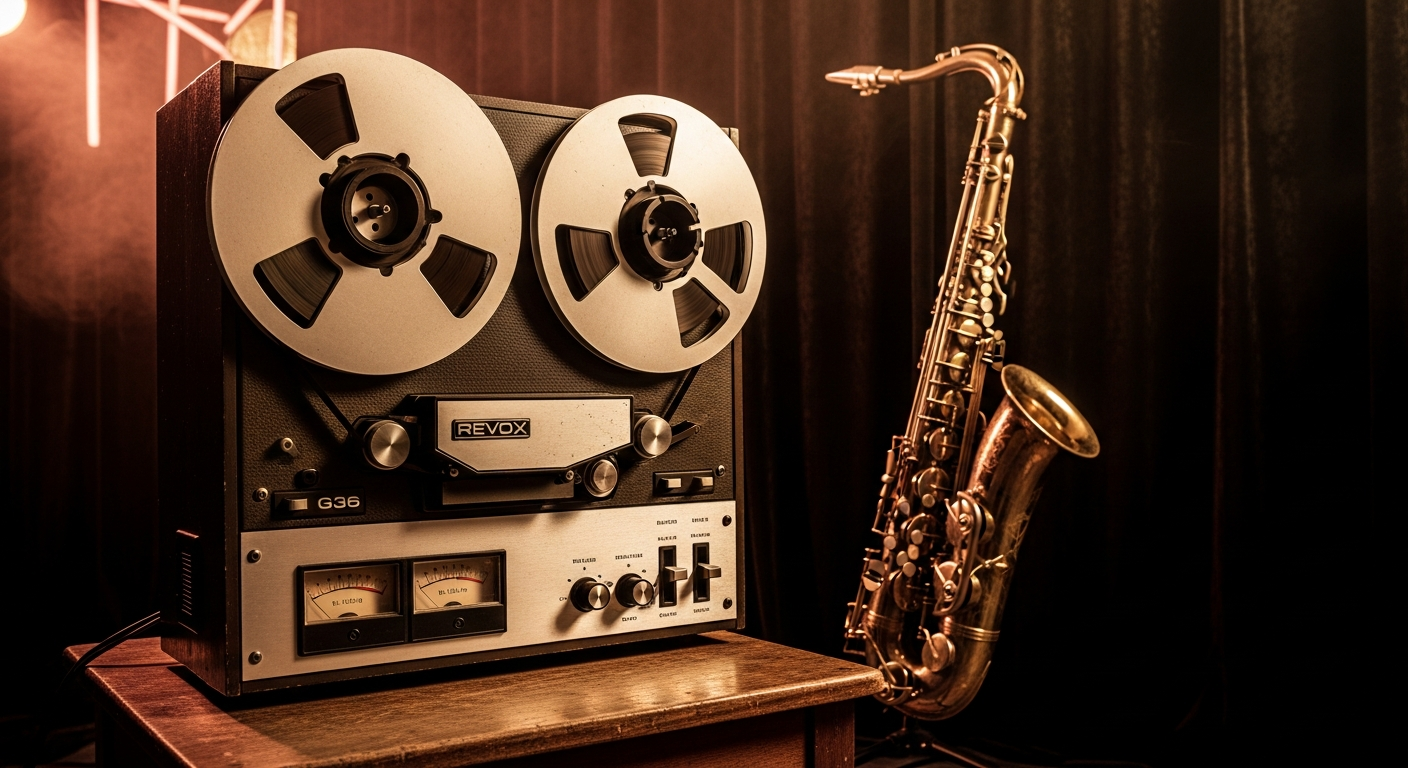
For decades, they've existed as rumor — a set of private reel-to-reel recordings, captured by a young saxophonist named Frank Tiberi in the smoky clubs of New York and Philadelphia between 1961 and 1965, documenting John Coltrane at the absolute peak of his artistic powers. Coltrane scholars have whispered about them. Bootleg snippets have surfaced and vanished. And now, finally, the world is going to hear them.
The Coltrane Estate has officially launched COLTRANE 100, an ambitious year-long global celebration honoring the 100th anniversary of the saxophonist's birth (September 23, 1926). At the center of the commemoration is the long-awaited release of the Tiberi Tapes, with a Record Store Day preview arriving April 18 and the full collection due from Impulse! Records in September 2026.
Who Is Frank Tiberi?
Frank Tiberi, now 97 years old, is one of jazz's great unsung witnesses. A saxophonist, arranger, and educator from Camden, New Jersey, he began performing publicly as a teenager and went on to a long career that included a decades-long stint with the Woody Herman Orchestra. But it's his role as an obsessive private documentarian of John Coltrane's club work that history may remember most.
Throughout the early 1960s — the period when Coltrane was leading his classic quartet with McCoy Tyner, Jimmy Garrison, and Elvin Jones, and beginning the spiritual journey that would produce A Love Supreme — Tiberi was in the audience with a tape machine, capturing what he believed was happening differently in those informal settings than on the official Impulse! studio dates.
"It was just the most relaxed situation," Tiberi recalls of those nights, "compared to all of those albums."
What's on the Tapes?
The full extent of the collection has not been publicly catalogued, but Coltrane's quartet during these years was at its most explosive and exploratory. The Village Vanguard, the Half Note, Birdland, and Philadelphia's Showboat were all venues where the band stretched material to extraordinary lengths, with Coltrane's solos sometimes occupying entire LP sides on the official live releases.
The promise of the Tiberi Tapes is twofold: first, that they will reveal previously undocumented performances of well-known repertoire (we know Coltrane never played a tune the same way twice), and second, that they may include music that didn't make it onto any commercial recording. The Record Store Day preview will give listeners a first taste; the September release will tell the full story.
The Broader COLTRANE 100 Initiative
The Tiberi Tapes are just one piece of a sprawling commemoration that will unfold across the entire year. Other COLTRANE 100 components include:
- Live performances — Major venues including the New Jersey Performing Arts Center (NJPAC) are programming Coltrane centennial concerts throughout 2026, with NJPAC's COLTRANE CENTENNIAL programming anchoring its Jazz Appreciation Month calendar
- Reissues and box sets — Expect remastered editions of classic Impulse! titles and possibly new compilations drawing from the Coltrane archive
- Visual art and exhibitions — Museums and cultural institutions worldwide are presenting Coltrane-themed programming, including a curated emphasis at the Smithsonian's National Museum of American History during Jazz Appreciation Month
- Educational programming — Universities, conservatories, and jazz education organizations are building Coltrane-focused curricula and master classes
Why This Matters
It's hard to overstate Coltrane's centrality to the music. In the four years between his classic quartet's formation and his death from liver cancer in 1967, Coltrane created a body of work that has influenced essentially every saxophonist who has played jazz since — and reached well beyond jazz to shape the language of rock, ambient music, and contemporary classical composition.
The Tiberi Tapes promise to fill in gaps in our picture of how that music actually sounded in the rooms where it was made — not the studio takes selected and sequenced for LP release, but the searching, mercurial, sometimes ecstatic performances that audiences in 1962 or 1964 actually witnessed. That's an extraordinary gift, half a century after the fact.
April 18 can't come soon enough.