
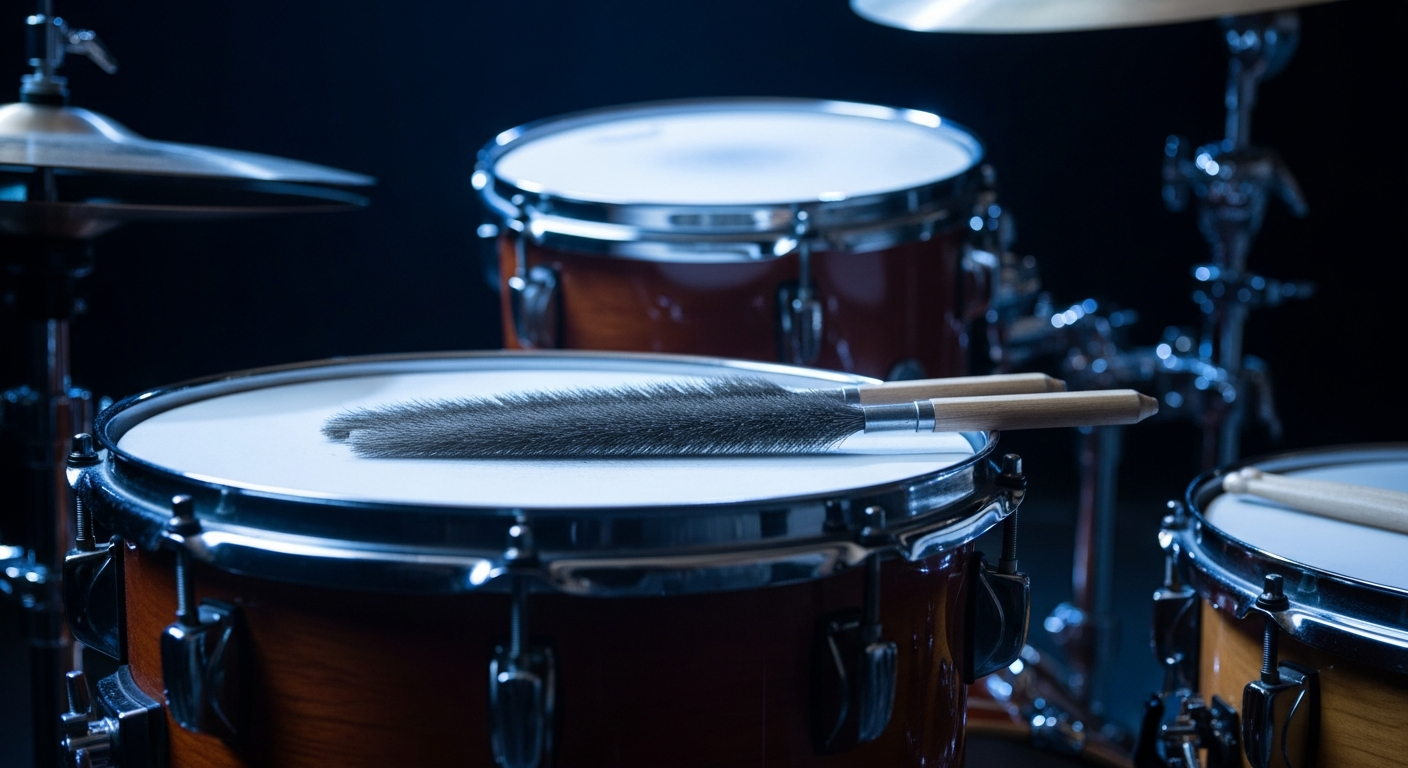
In a basement rehearsal room in East London, a drummer sits behind a kit that would have been unrecognisable to jazz musicians just two decades ago. The acoustic drums are still there — the warmth of wood and metal, the resonance of tuned heads. But nestled among them are electronic pads, contact microphones feeding into a laptop, and a small modular synthesiser triggered by the kick drum.
What Is Hybrid Drumming in Jazz?
This is the new frontier of jazz rhythm: a hybrid space where acoustic tradition meets electronic possibility. Over 60% of jazz drummers under 40 now incorporate some form of electronic percussion into their live setups, according to a recent survey of working musicians. The movement has grown from a niche experiment into something approaching a new standard.
The hybrid approach is not about replacing acoustic drums. It is about expanding the rhythmic and tonal palette available to the drummer. A single strike on an acoustic snare can simultaneously trigger a sample, a synthesiser note, and a processed reverb tail, creating layers of sound that would be impossible with acoustic instruments alone.
How Did Electronic Drums Enter Jazz?
The lineage is longer than many realise. Tony Williams, arguably the most influential jazz drummer of the post-bop era, was experimenting with electronics in his band Lifetime as early as 1969. His vision of jazz-rock fusion included an embrace of amplification and electronic sound processing that scandalised jazz purists.
The hip-hop revolution added another layer. The rhythmic innovations of producers like J Dilla — whose off-kilter timing and sample-based compositions have become central to contemporary jazz vocabulary — demonstrated that drum machines and acoustic feel were not mutually exclusive.
What Does This Mean for Jazz Education?
The academic world is catching up. Several leading conservatories have added electronic percussion modules to their jazz curriculum for the first time in 2026. Students are learning not only traditional stick technique and brush work but also programming, sound design, and the integration of electronic elements into acoustic performance.
Jazz has always been about expanding the vocabulary. The drum machine is just another voice in the conversation — the question is whether you have something to say with it.
The results can be extraordinary. At their best, hybrid drummers create rhythmic environments that are simultaneously ancient and futuristic, grounded in the swing tradition yet reaching toward sonic territories that acoustic drums alone cannot access.