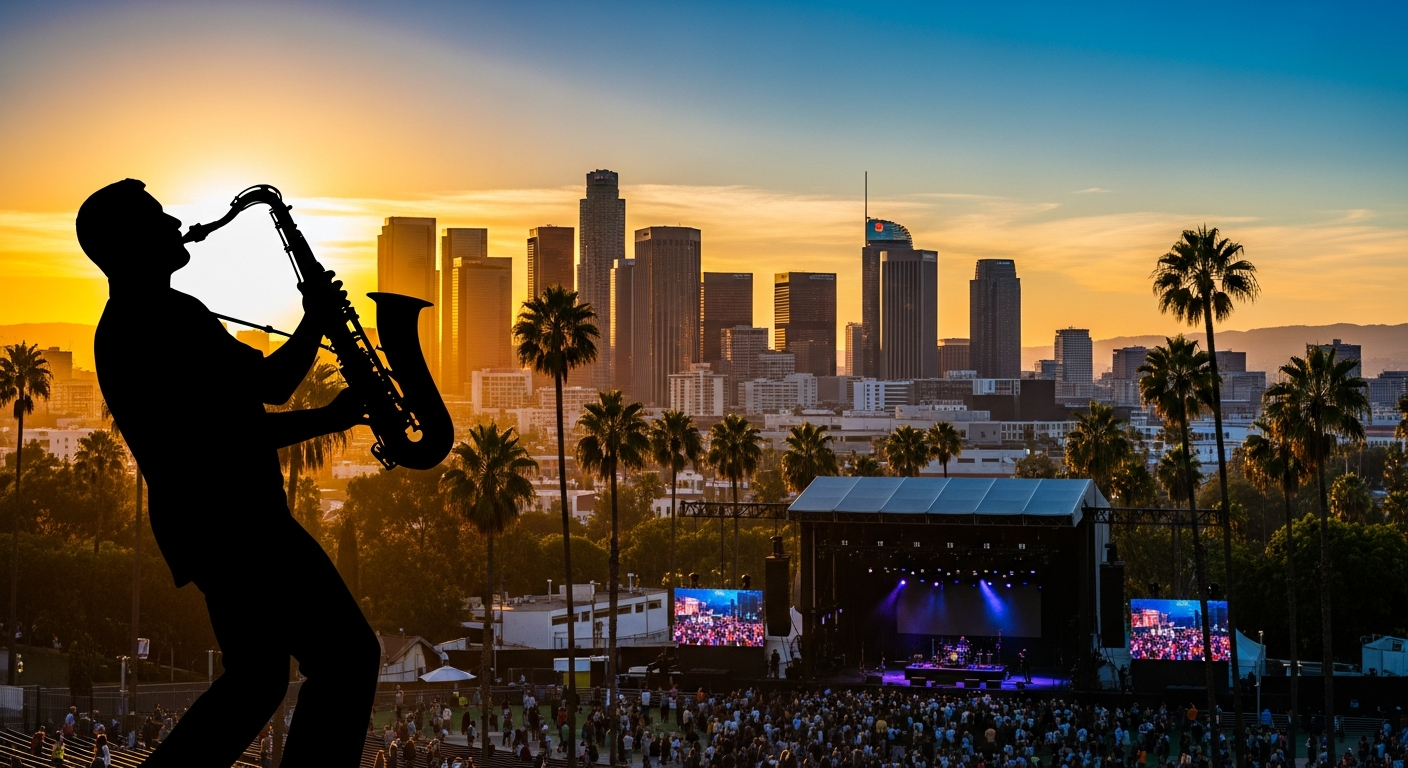
In a move that has been decades in the making, the City of Los Angeles has officially announced its first-ever citywide jazz festival for summer 2026. The announcement, made on February 19 by city officials and a coalition of cultural organizations, positions LA alongside established jazz festival cities like New Orleans, Montreal, and Detroit — and marks a significant moment of institutional recognition for a jazz scene that has long punched above its weight without proportional civic support.
For a city that gave the world West Coast cool jazz, nurtured the careers of musicians from Charles Mingus to Kamasi Washington, and currently hosts one of the most active jazz club circuits in the country, the question has never been whether LA deserved a major jazz festival. The question was when.
What We Know So Far
The festival's structure is ambitious and deliberately decentralized. Rather than concentrating all programming in a single venue or neighborhood, the Los Angeles Jazz Festival will bring free jazz concerts to parks in each of the city's 15 council districts — a model designed to ensure that every community in LA has access to the music, regardless of geography or income.
The final weekend will feature a four-stage Caribbean Street Festival in El Segundo, blending jazz with Caribbean musical traditions in a celebration that reflects LA's extraordinary cultural diversity. The choice of a Caribbean theme for the festival's capstone event is a meaningful one, acknowledging the deep historical connections between Caribbean music and jazz — from the Afro-Cuban jazz of Machito and Chano Pozo to the Trinidadian calypso influences that shaped early New Orleans jazz.
Why This Matters
Los Angeles has always had jazz. What it hasn't had — until now — is the kind of city-backed, large-scale festival infrastructure that transforms a local scene into a destination event and generates the economic and cultural momentum that sustains the music long-term.
Consider the precedents. The New Orleans Jazz & Heritage Festival, now in its sixth decade, has become an economic engine that generates hundreds of millions of dollars annually while serving as a global ambassador for the city's musical culture. The Montreal International Jazz Festival draws nearly two million visitors each year. Even smaller-scale events like the Detroit Jazz Festival — the world's largest free jazz festival — have demonstrated that free, publicly supported jazz programming can anchor neighborhood revitalization and cultural tourism.
LA's festival, with its emphasis on free community concerts and district-by-district programming, appears to be drawing from the Detroit model while adapting it to the sprawling geography of the nation's second-largest city.
The Broader 2026 Festival Landscape
The LA announcement lands in what is shaping up to be one of the most packed jazz festival seasons in recent memory. Here's a snapshot of what's happening across the summer:
- New Orleans Jazz & Heritage Festival — April 23 to May 3. Headliners include The Eagles, Stevie Nicks, Rod Stewart, Kings of Leon, and Lainey Wilson, alongside the Preservation Hall Jazz Band and hundreds of acts across 12 stages
- Cheltenham Jazz Festival — April 29 to May 4. One of the UK's premier jazz events
- Jacksonville Jazz Festival — May 21–24. A free four-day festival in downtown Jacksonville
- Seoul Jazz Festival — May 22–24. Asia's growing jazz destination
- Atlanta Jazz Festival — May 23–25. One of the largest free jazz festivals in the US
- Java Jazz Festival — May 29–31. Southeast Asia's biggest jazz event, held in Jakarta
- Rochester International Jazz Festival — June 19–27. Nine days of programming with over 1,500 musicians
- JAS Aspen Snowmass — June 25–28. Jazz in the Colorado mountains
With 47+ jazz festivals confirmed worldwide for summer 2026, the global appetite for live jazz shows no signs of diminishing — and LA's entry into the festival circuit adds significant gravity to the season.
LA's Jazz Heritage
It's worth pausing to appreciate the depth of the jazz tradition that the new festival will be celebrating. Los Angeles' contributions to jazz history are enormous and often underappreciated:
- Central Avenue, the legendary corridor of Black cultural life in mid-century LA, was home to clubs like the Dunbar Hotel, the Club Alabam, and the Last Word, where musicians including Charlie Parker, Dizzy Gillespie, and Dexter Gordon performed and developed their art
- The West Coast cool jazz movement of the 1950s — led by figures like Chet Baker, Gerry Mulligan, and Dave Brubeck — emerged from LA's studios and clubs
- Charles Mingus grew up in Watts and developed his revolutionary approach to composition and bandleading in LA before moving to New York
- The Leimert Park neighborhood has served as a jazz and arts hub since the 1990s, anchored by venues like the World Stage performance gallery founded by drummer Billy Higgins
- More recently, Kamasi Washington's landmark 2015 album The Epic — recorded entirely in LA — sparked a global resurgence of interest in spiritual jazz and demonstrated that the city remains a vital center of jazz innovation
What to Watch For
The city has not yet announced specific dates, venue details, or artist lineups. Based on the February announcement, we expect further details to emerge in May or early June. Key questions that remain:
- Artist lineup — Will the festival prioritize LA-based artists, or will it also bring in national and international headliners?
- Venue specifics — Which parks in each district will host performances?
- Scale of the Caribbean Street Festival — Four stages suggests a substantial production; how many artists and what genres beyond jazz will be represented?
- Sustainability — Is this a one-off event, or the first edition of an annual festival?
We'll be tracking every development as more information becomes available. For now, the jazz community — in LA and beyond — has good reason to be excited. The city that helped invent cool jazz is finally giving the music a festival worthy of its legacy.