In 1973, Herbie Hancock sat down at an ARP Odyssey synthesizer and played a bass line that would change music forever. The track was "Chameleon," the opening cut on Head Hunters, and its funky, squelching synthesizer line drew a direct path from jazz to the electronic dance music that would emerge a decade later.
How Did Jazz Musicians Start Using Synthesizers?
The synthesizer entered jazz through the side door. Sun Ra, the cosmic visionary from Chicago, was experimenting with early electronic instruments as far back as the 1950s. But it was the arrival of commercially available synthesizers in the late 1960s — the Moog, the ARP, the Buchla — that opened the floodgates.
Hancock was not alone. Chick Corea's Return to Forever used the Minimoog to create soaring, virtuosic lead lines that anticipated the trance music of the 1990s. Joe Zawinul of Weather Report used the ARP 2600 and Oberheim polyphonic synthesizers to create lush, atmospheric textures that prefigured ambient and downtempo electronic music. Jan Hammer's Minimoog playing with the Mahavishnu Orchestra was so fluid and expressive that it blurred the line between acoustic and electronic instruments entirely.
How Did These Sounds Become EDM?
The path from jazz fusion to electronic dance music runs through Detroit. In the early 1980s, three young men — Juan Atkins, Derrick May, and Kevin Saunderson — began making music with the same synthesizers that jazz fusion artists had pioneered. Atkins has explicitly cited Hancock's "Future Shock" and Kraftwerk as equal influences. May described his music as "George Clinton and Kraftwerk stuck in an elevator with only a sequencer to keep them company."
The instruments were literally the same. The Roland TR-808 drum machine, the Roland TB-303 bass synthesizer, the Juno-106 polysynth — all of these were designed in the early 1980s, used by jazz-funk musicians, and then adopted by the producers who created techno, house, and acid.
Why Are EDM Producers Returning to Jazz Fusion?
Today's electronic producers are closing the circle. A growing number of EDM artists cite jazz fusion as a primary influence — not just for its sounds but for its compositional ambition. The extended structures of jazz fusion tracks, their harmonic complexity, and their willingness to modulate between moods and textures within a single piece all offer models for electronic music that aspires to more than repetitive loops.
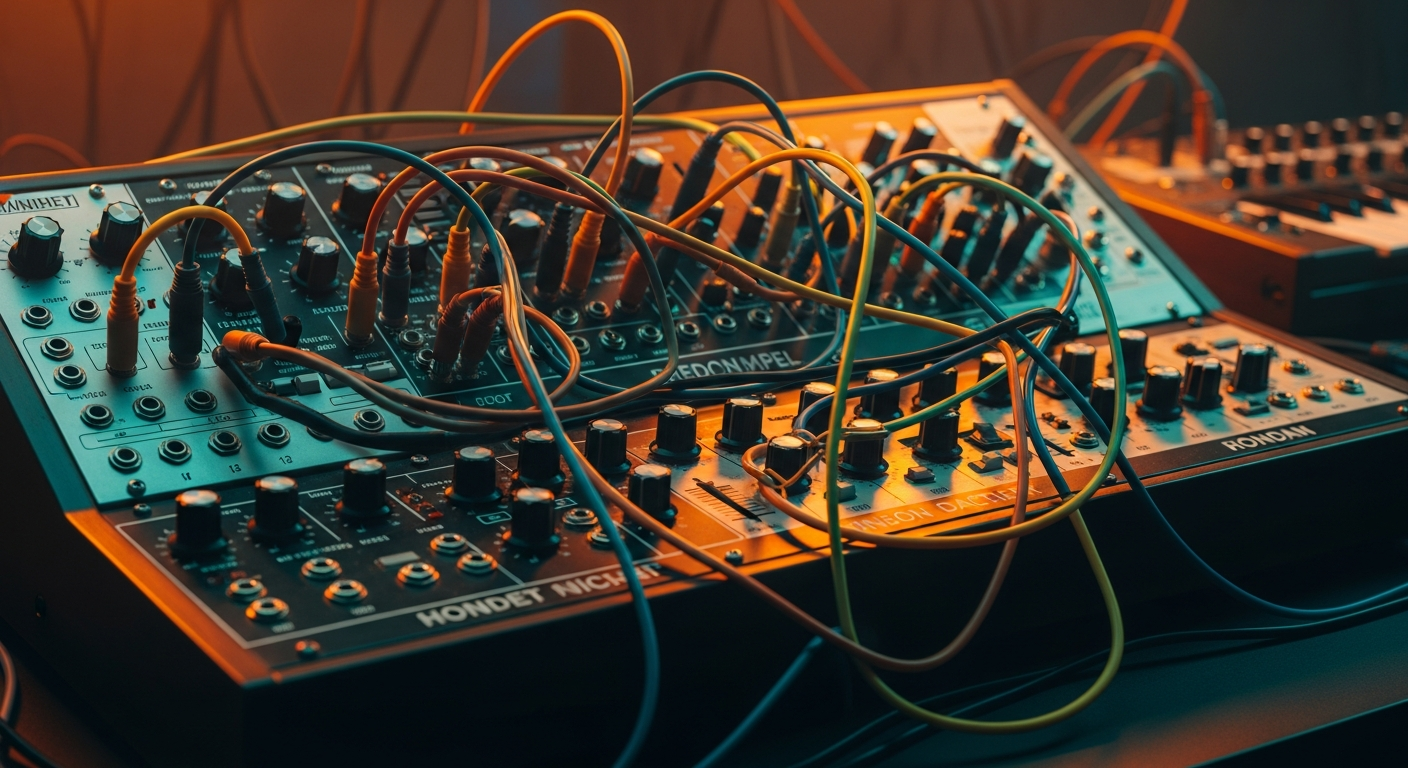
The modular synthesizer revival has created a particularly fertile meeting point. Both jazz improvisers and electronic producers are drawn to modular synthesis because it demands real-time decision-making — patching, tweaking, responding to unexpected sonic events. This is improvisation by another name, and it has created a new community where genre boundaries dissolve at the patch bay.
Herbie Hancock once said he was not interested in categories, only in sounds. That philosophy — follow the sound wherever it leads — is the thread that connects Head Hunters to every synthesizer-driven dance floor in the world.