In the practice rooms and lecture halls of the world's leading jazz conservatories, a fierce debate is underway. It concerns nothing less than the future of jazz education: what should a jazz student learn in 2026? And what does the jazz world need them to know?
What Do Jazz Students Learn at Conservatory?
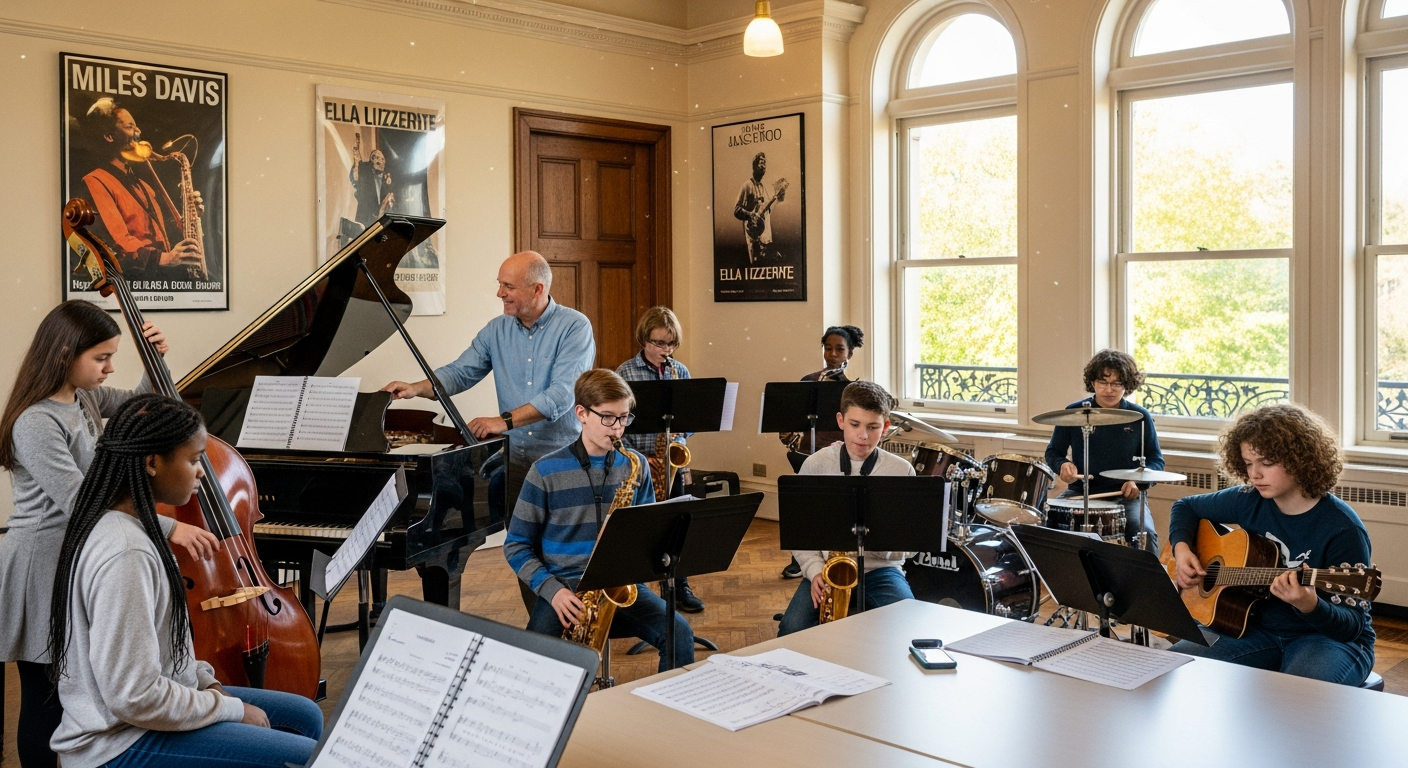
The traditional jazz curriculum, refined over decades at institutions like Berklee, the Royal Academy, and the New School, focuses on performance mastery. Students memorise hundreds of jazz standards, transcribe solos by master musicians, study jazz harmony and theory, develop their ear through rigorous training, and perform in student ensembles under the guidance of faculty who are themselves active performers.
This model produces technically accomplished musicians with deep knowledge of the jazz tradition. But critics argue that it does not adequately prepare students for the realities of a 2026 music career.
How Is the Curriculum Changing?
Leading conservatories are introducing significant changes. Business skills — marketing, brand development, social media strategy, and financial planning — are being added to performance programmes. Music production and technology modules are becoming standard. Some programmes have introduced mandatory courses on mental health and sustainable career planning.
The most progressive institutions are going further. Interdisciplinary modules connect jazz with visual art, dance, theatre, and film. Entrepreneurship incubators help students develop their own projects and revenue streams. Recording studio access is expanding, with students expected to produce their own recordings alongside live performance.
What Is the Core of the Debate?
The fundamental tension is between breadth and depth. Should conservatories train versatile music professionals who can compose, produce, market, and perform? Or should they preserve the specialised, intensive focus on jazz performance that has produced generations of master musicians?
A conservatory should not just teach you to play jazz — it should teach you to build a life in jazz. Those are very different things, and both matter enormously.
The answer, increasingly, is that both approaches must coexist. The most successful programmes are finding ways to maintain rigorous performance training while adding the practical skills that today's graduates need. The jazz musician of 2026 must be an artist, a producer, a marketer, and an entrepreneur — and education must reflect that reality.