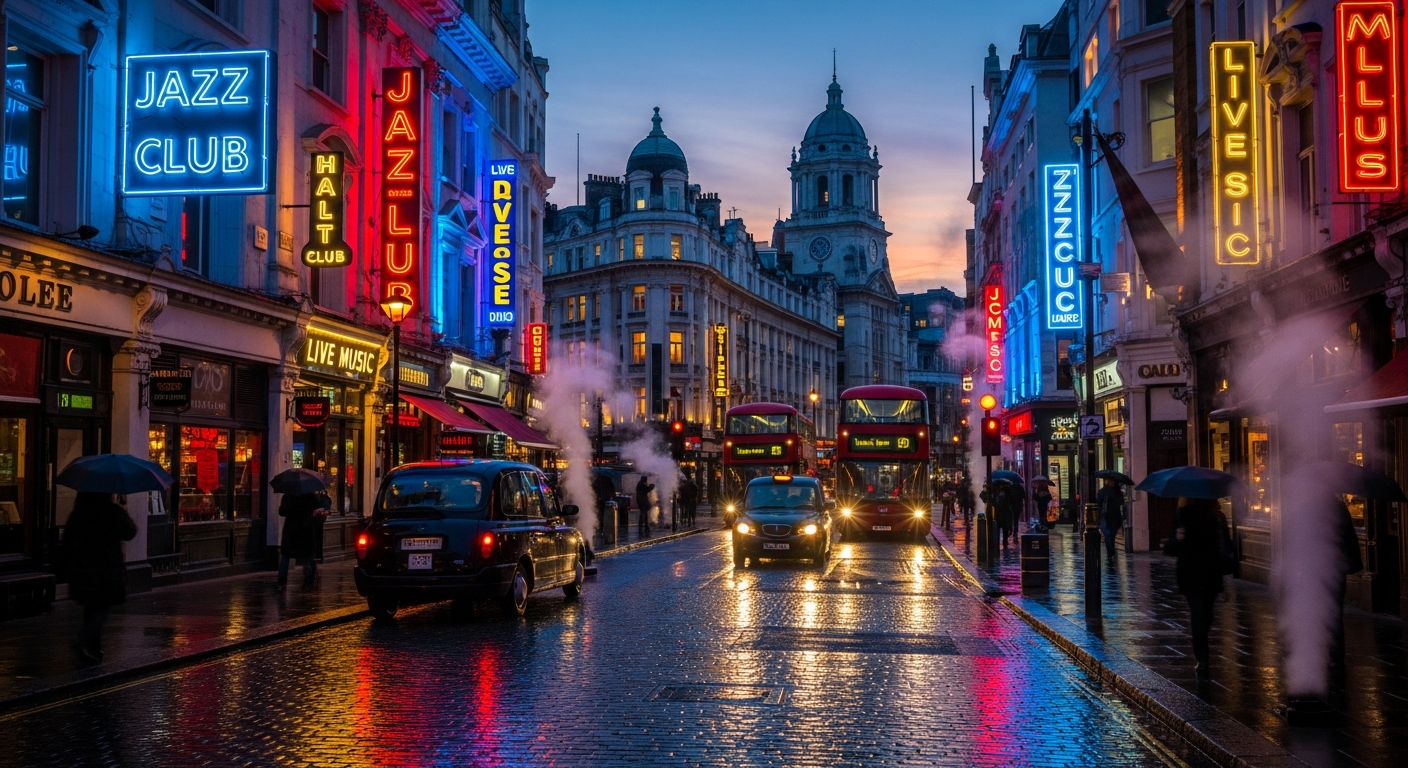
London has always been a jazz city. From the arrival of the Original Dixieland Jazz Band in 1919 through the golden age of Ronnie Scott's and the rise of British jazz fusion in the 1970s, the capital has nurtured, challenged, and celebrated jazz in all its forms. In 2026, the scene has never been more vital.
Where Can I Hear Live Jazz in London?
Soho and the West End remain the historic heart of London jazz. Ronnie Scott's, which opened on Frith Street in 1965, continues to book international headliners alongside rising British talent. The intimate basement room, with its legendary acoustics, offers the quintessential London jazz experience.
South London has emerged as the most exciting neighbourhood for jazz discovery. Peckham's warehouse venues host weekly sessions that blur the boundaries between jazz, grime, and electronic music. Brixton offers more traditional settings alongside experimental programmes. Deptford's artist-run spaces provide platforms for the most adventurous music in the city.
East London — particularly Dalston and Hackney — has developed a distinctive jazz-electronic hybrid scene. Venues here attract audiences who might equally attend a techno night or a free improvisation concert, and the programming reflects this eclecticism.
How Has London's Jazz Audience Changed?
The demographic transformation is striking. The average age of London jazz audiences has dropped to 32, the youngest in recorded history. This shift has been driven by the South London scene, where jazz has become intertwined with the cultural identity of a young, diverse, and culturally engaged generation.
The audience is also more diverse in every sense. London jazz venues report audiences that reflect the city's multicultural composition far more accurately than a decade ago. Programming has followed, with African, Caribbean, South Asian, and Middle Eastern jazz traditions given prominent platforms alongside the Euro-American mainstream.
London doesn't have a jazz scene — it has dozens, overlapping and interacting in ways that no other city can quite replicate. That's its genius.
With over 150 weekly jazz events across more than 60 dedicated venues, London's claim to be the jazz capital of Europe has never been stronger. The scene is diverse, democratic, and defiantly creative — a mirror of the city itself.