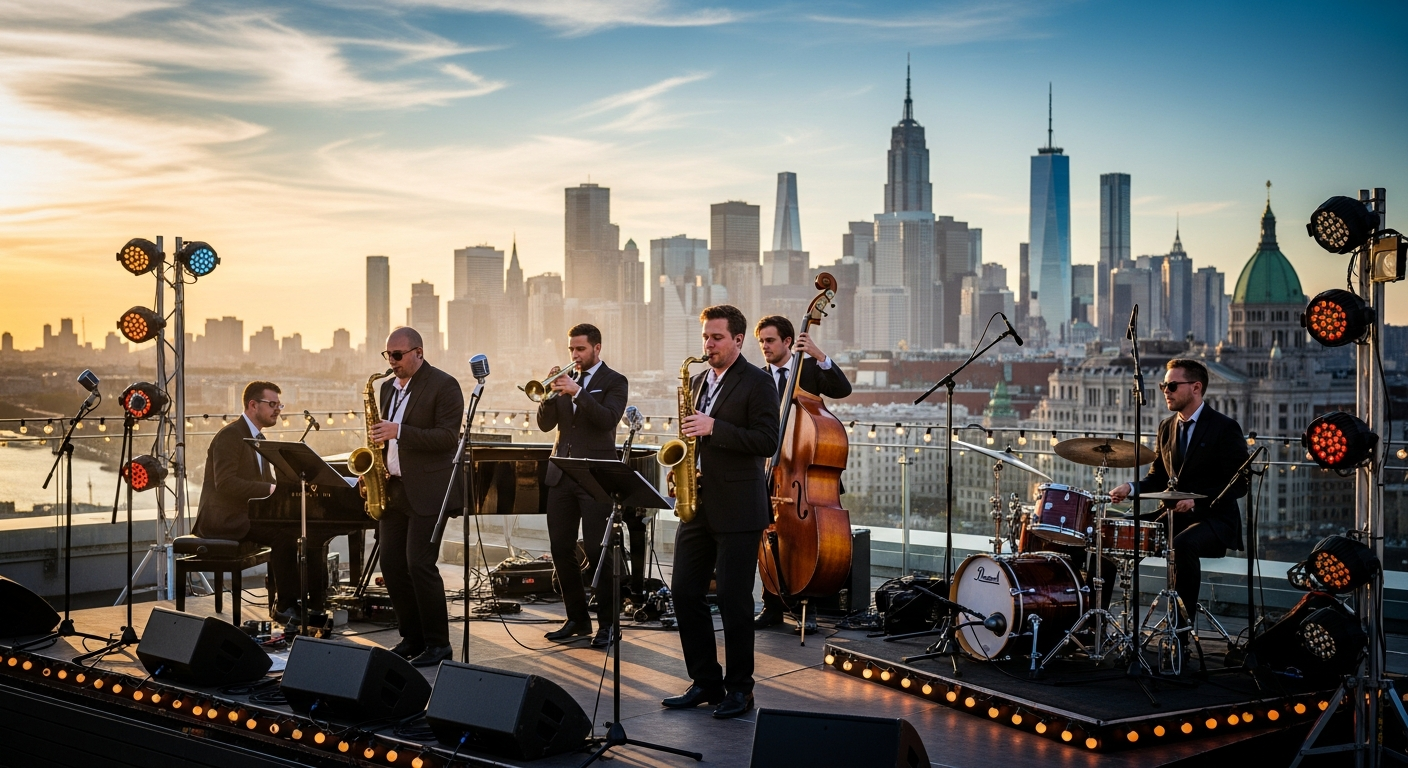
As the sun sets over the city skyline, a trumpet sounds from an unexpected height. On a rooftop twenty stories above the street, a quartet is playing to an audience of a hundred people who have swapped the underground jazz club for a view of the stars. Welcome to the rooftop jazz revolution.
Why Is Rooftop Jazz Popular?
Rooftop jazz events have increased over 200% since 2022, making them one of the fastest-growing categories in live music. The trend spans continents — London hotel rooftops, New York warehouse terraces, Tokyo department store gardens, Barcelona harbour-view venues all now host regular jazz programming.
The appeal is multifaceted. There is the visual drama of live music performed against a backdrop of city lights. There is the exclusivity of events that are necessarily limited in capacity. And there is a quality of sound — music floating in open air, unconfined by walls — that creates a listening experience fundamentally different from enclosed venues.
What Challenges Does Rooftop Jazz Present?
The format presents unique challenges. Wind can play havoc with music stands and sheet music. Noise ordinances limit volume levels and performance hours. Equipment must be transported to locations never designed for live music production. And weather is always an unpredictable co-producer.
These challenges have driven innovation. Portable sound systems specifically designed for rooftop use have become a niche market. Wireless in-ear monitoring allows musicians to hear each other clearly even in wind. And flexible programming models — with indoor backup venues on lower floors — have made the format commercially viable despite weather uncertainty.
There is something about hearing jazz in the open air, with the city spread beneath you, that strips the music of all pretension. It becomes what it was always meant to be — sound, shared in a moment, between people who chose to be there.