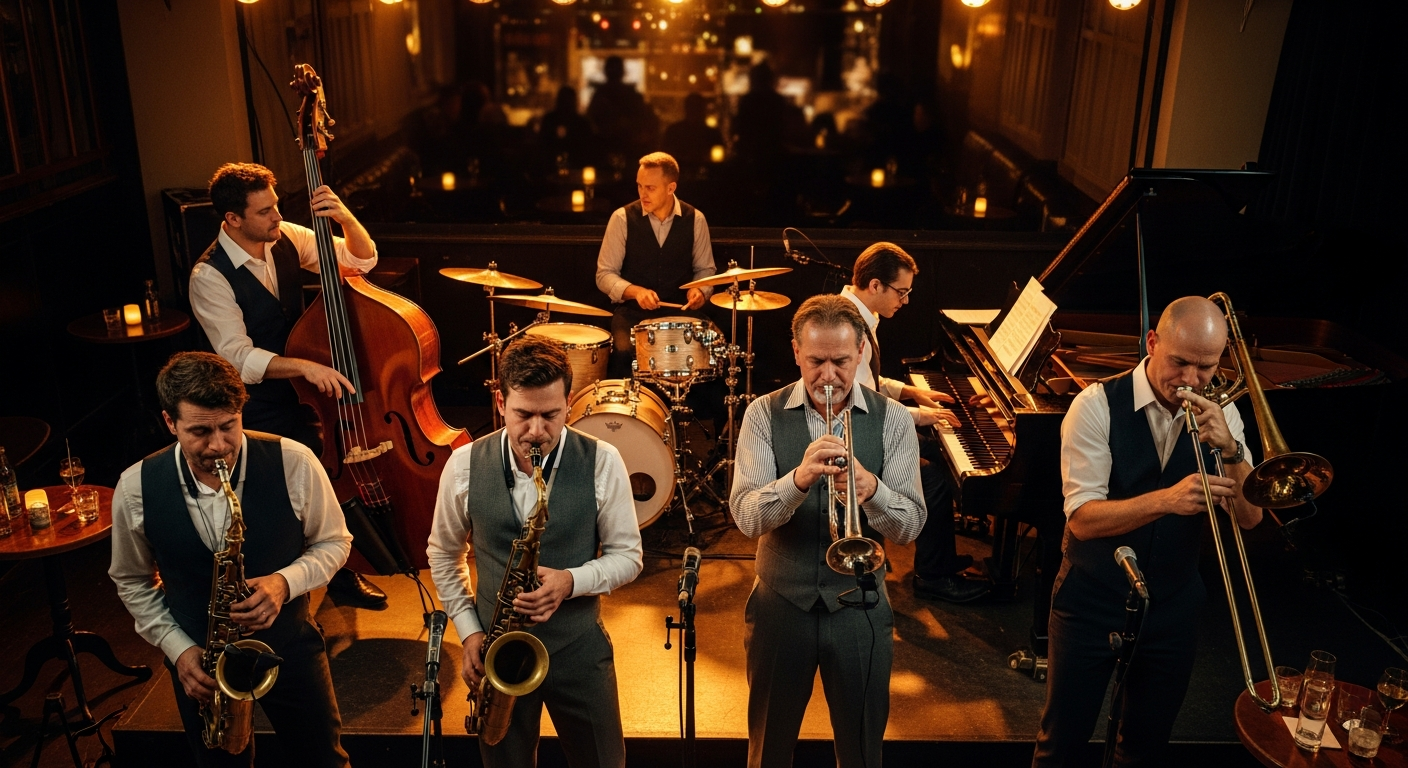
Walk into a jazz club on any given night and you might see a solo pianist, a trio, a quartet with a saxophone, or a 17-piece big band filling the stage. Jazz is the most flexible genre in music when it comes to instrumentation — there is no single 'correct' lineup. But every jazz ensemble is built from the same basic building blocks, and understanding what each instrument does is the key to understanding how jazz works.
The Rhythm Section: The Engine Room
Every jazz ensemble, from a duo to a big band, is built on the rhythm section. These are the instruments that provide the harmonic foundation, the bass line, and the rhythmic drive that everything else rests on.
Piano
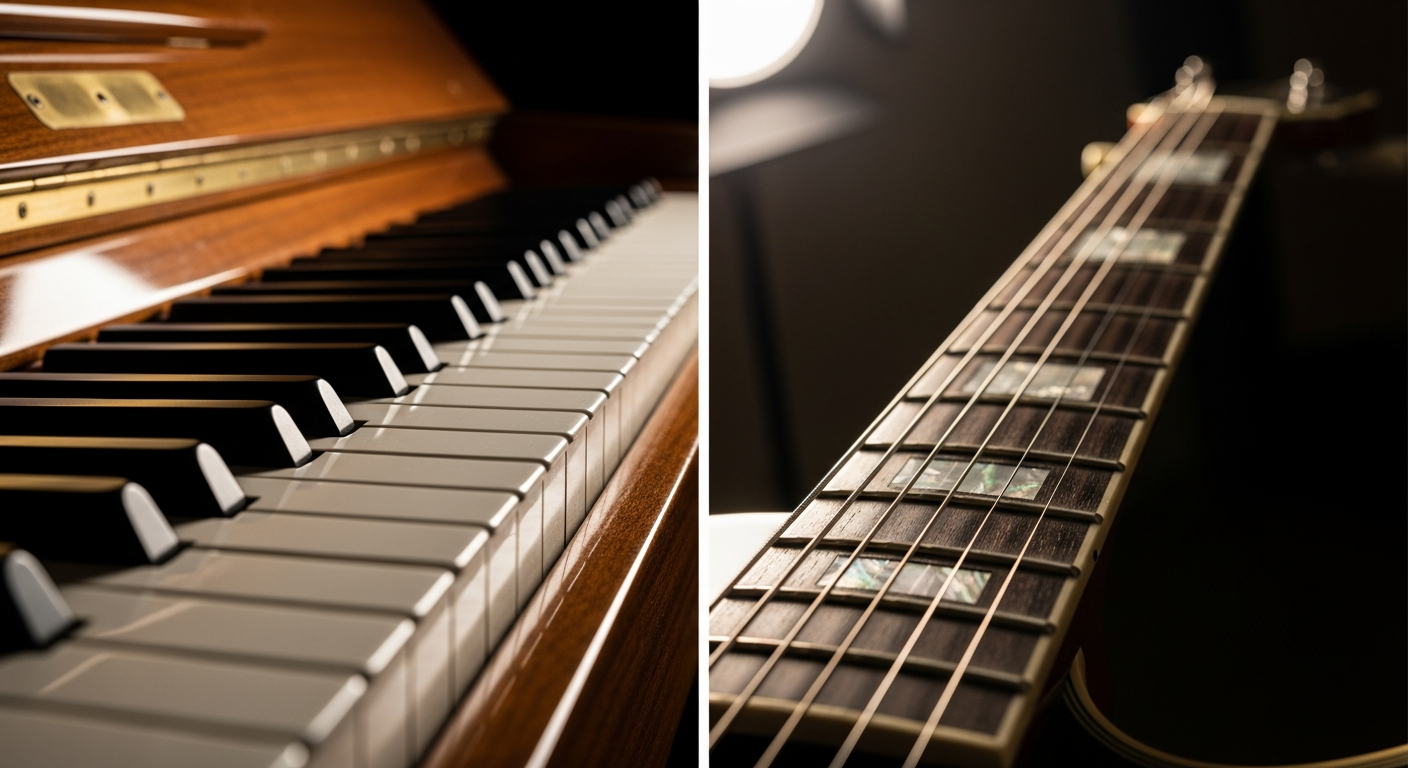
The piano is the harmonic centre of a jazz ensemble. The pianist 'comps' — plays chord voicings (see our Chord Voicing Reference for examples) that outline the harmony and respond to the soloist. In a trio setting, the piano also takes melodic solos. Great jazz pianists — Bill Evans, Thelonious Monk, Herbie Hancock, McCoy Tyner, Keith Jarrett — are among the most celebrated musicians in jazz history. The piano's range and polyphonic capability make it the most complete single instrument in jazz.
Upright Bass (Double Bass)
The bass provides the harmonic and rhythmic foundation. In traditional jazz, the bassist 'walks' — playing a steady stream of quarter notes that outline the chord changes and propel the rhythm forward. Walking bass is one of the most distinctive sounds in jazz. The bass also takes solos, particularly in modern jazz, where players like Ron Carter, Charles Mingus, and Esperanza Spalding have elevated the instrument to equal footing with the horns.
Drums
The jazz drummer does far more than keep time. The drum kit in jazz is a melodic, interactive instrument. The drummer maintains the basic pulse on the ride cymbal and hi-hat, but constantly varies the snare drum and bass drum patterns in response to what the soloists and other rhythm section members are playing. This interactive approach — called 'conversational drumming' — is unique to jazz. Great jazz drummers (Art Blakey, Max Roach, Tony Williams, Elvin Jones, Jack DeJohnette) are as creative and influential as any horn player.
Guitar
The guitar serves a similar harmonic role to the piano in jazz — comping chord voicings behind soloists and taking melodic solos. In some ensembles, the guitar replaces the piano entirely; in others, both are present. Jazz guitar tone is typically warm and clean (no distortion), played on a hollow-body or semi-hollow electric guitar. Wes Montgomery, Joe Pass, Jim Hall, and Pat Metheny are among the instrument's most influential voices.
The Horns: The Voice of Jazz
Saxophone
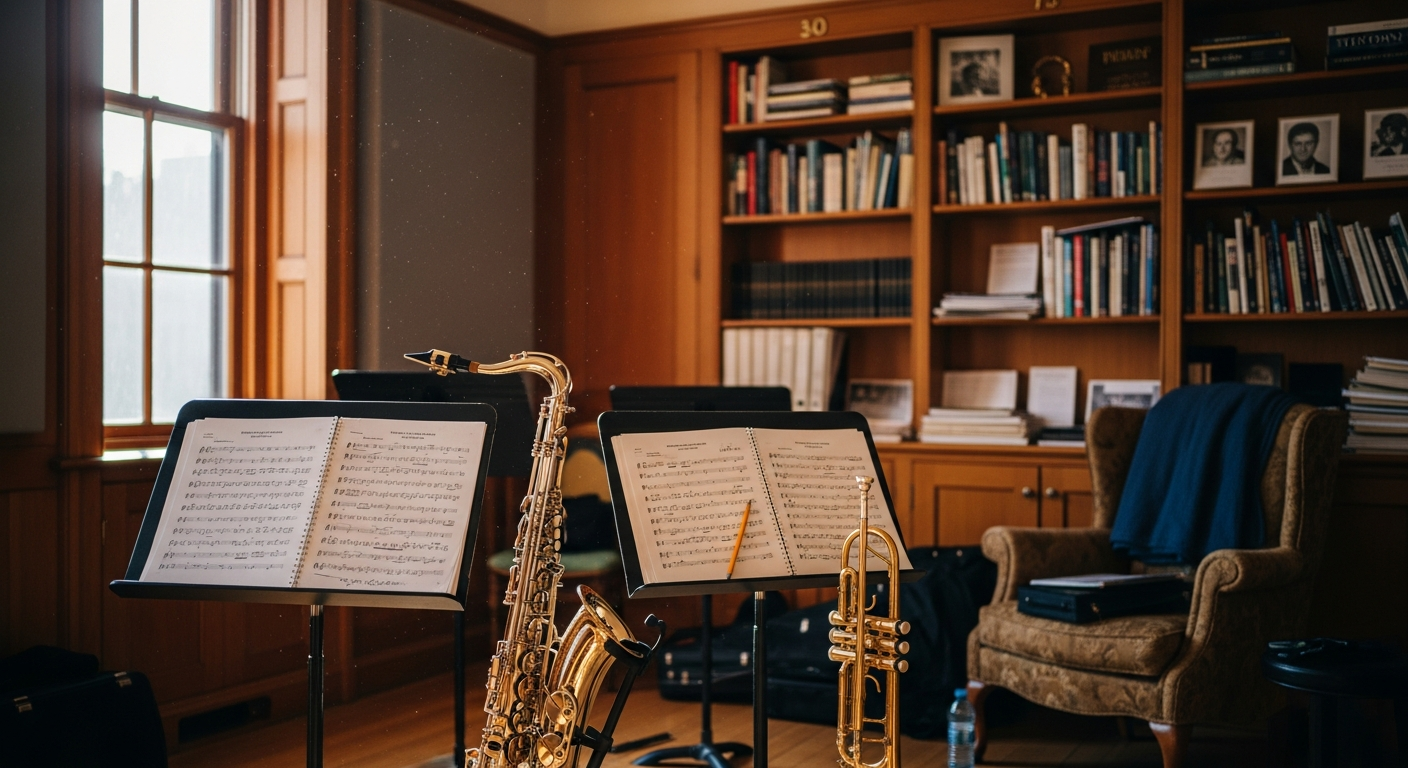
The saxophone is the most iconic jazz instrument. Four types are commonly used in jazz:
- Alto saxophone: Bright, agile, and expressive. Charlie Parker, Cannonball Adderley, and Phil Woods made it the lead voice of bebop and hard bop.
- Tenor saxophone: Warm, powerful, and versatile. John Coltrane, Sonny Rollins, Dexter Gordon, and Stan Getz represent just a fraction of the tenor's rich legacy. It is arguably the single most important instrument in jazz.
- Soprano saxophone: Straight or curved, with a piercing, oboe-like quality. John Coltrane popularised it in the 1960s; Wayne Shorter and Branford Marsalis continued the tradition.
- Baritone saxophone: Deep, rich, and commanding. Gerry Mulligan and Pepper Adams demonstrated that the baritone could be a nimble jazz instrument despite its size.
Trumpet
The trumpet has been at the centre of jazz from the very beginning. Louis Armstrong essentially invented jazz soloing on the trumpet in the 1920s. Dizzy Gillespie brought the trumpet into the bebop era. Miles Davis redefined it in every decade from the 1940s to the 1990s. The trumpet's brilliance and carrying power make it a natural lead instrument, equally effective in intimate combos and roaring big bands.
Trombone
The trombone's slide mechanism gives it the ability to glide between notes (glissando) in a way that no valve instrument can match. In early jazz, the trombone provided a rich, vocal countermelody. In modern jazz, players like J.J. Johnson proved it could handle bebop's rapid chord changes with the same agility as a trumpet or saxophone. The trombone is also essential to big band section writing, providing the harmonic middle voice between trumpets and saxophones.
Clarinet
The clarinet was the dominant reed instrument in early jazz and swing — Benny Goodman, Artie Shaw, and Sidney Bechet were among the biggest stars in music. Its prominence declined after the 1940s as the saxophone took centre stage, but it has never disappeared entirely. Eric Dolphy, Don Byron, and Anat Cohen have kept the clarinet alive in modern jazz.
Flute
The flute is a secondary instrument for many jazz saxophonists, adding tonal variety to a performance. Herbie Mann, Hubert Laws, and Yusef Lateef are among the few who have made it a primary jazz voice. The flute's breathy, gentle tone works particularly well in Latin jazz and bossa nova settings.
Other Instruments
Vibraphone
The vibraphone (vibes) combines the melodic capability of a piano with the sustain and shimmer of a tuned percussion instrument. Milt Jackson, Bobby Hutcherson, and Gary Burton made it a distinctive jazz voice. Its bell-like tone and ability to play both melody and chords give it a unique place in jazz.
Organ (Hammond B3)
The Hammond organ brings a soulful, churchy quality to jazz. In organ trio settings (organ, guitar, drums), the organist plays bass lines with the foot pedals and chords/melody with the hands, effectively covering the roles of both pianist and bassist. Jimmy Smith, Larry Young, and Joey DeFrancesco are the instrument's giants.
Voice
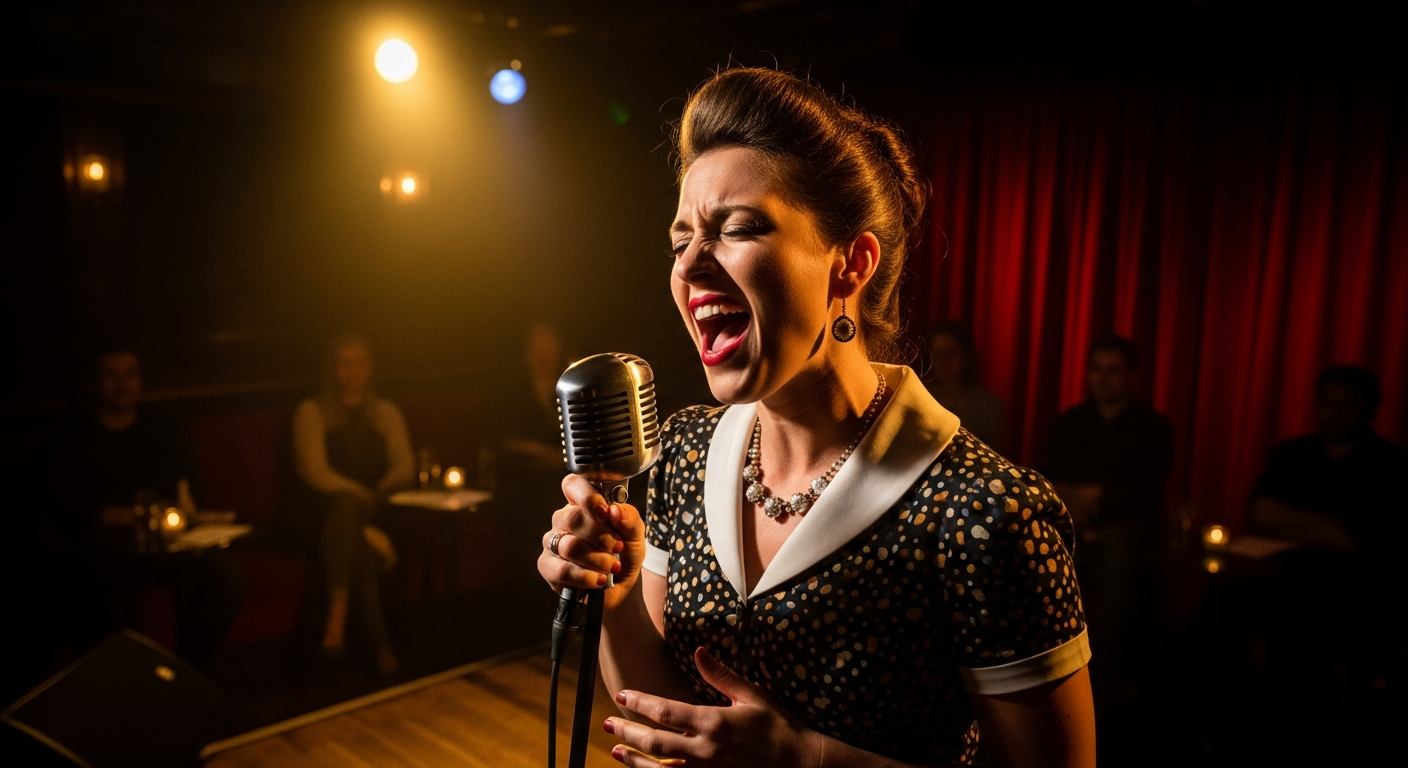
The human voice is jazz's original instrument. From Billie Holiday to Ella Fitzgerald to Sarah Vaughan to modern vocalists like Cécile McLorin Salvant, jazz singing demands the same improvisational skill and harmonic knowledge as playing an instrument. Scat singing — improvising with nonsense syllables — turns the voice into a horn, capable of the same melodic invention as any saxophone or trumpet.
Jazz Ensemble Formats
Jazz groups come in many sizes, each with different capabilities:
- Solo: One musician (usually piano). Art Tatum, Keith Jarrett, and Brad Mehldau are masters of solo jazz performance.
- Duo: Two musicians in conversation. Piano and bass, saxophone and piano, or any combination.
- Trio: The most popular small-group format. Piano trio (piano, bass, drums) is the most common; organ trio (organ, guitar, drums) is another classic configuration.
- Quartet: A trio plus one horn (saxophone or trumpet). This is the standard jazz combo format — Miles Davis's classic quartets and John Coltrane's quartet are the gold standard.
- Quintet: A trio plus two horns. Miles Davis's two Great Quintets and Art Blakey's Jazz Messengers are the most famous examples.
- Big Band: 15–20 musicians in sections (saxophones, trumpets, trombones, rhythm section). Big bands play from written arrangements with featured soloists. Duke Ellington, Count Basie, and Maria Schneider represent the best of big band jazz.
The beauty of jazz is that none of these formats is 'better' than another. A piano trio can be as profound as a big band; a solo saxophone performance can be as moving as a full orchestra. Jazz is about the quality of the musical conversation, not the number of participants.