Jazz is not just music you listen to — it is music with stories. Behind every album, every solo, and every stylistic revolution is a human story of genius, struggle, reinvention, and often heartbreak. The books on this list tell those stories, and they will transform the way you hear jazz. Whether you are a complete beginner or a lifelong fan, these are the books that belong on your shelf.
Autobiographies and Memoirs
1. Miles: The Autobiography — Miles Davis with Quincy Troupe (1989)
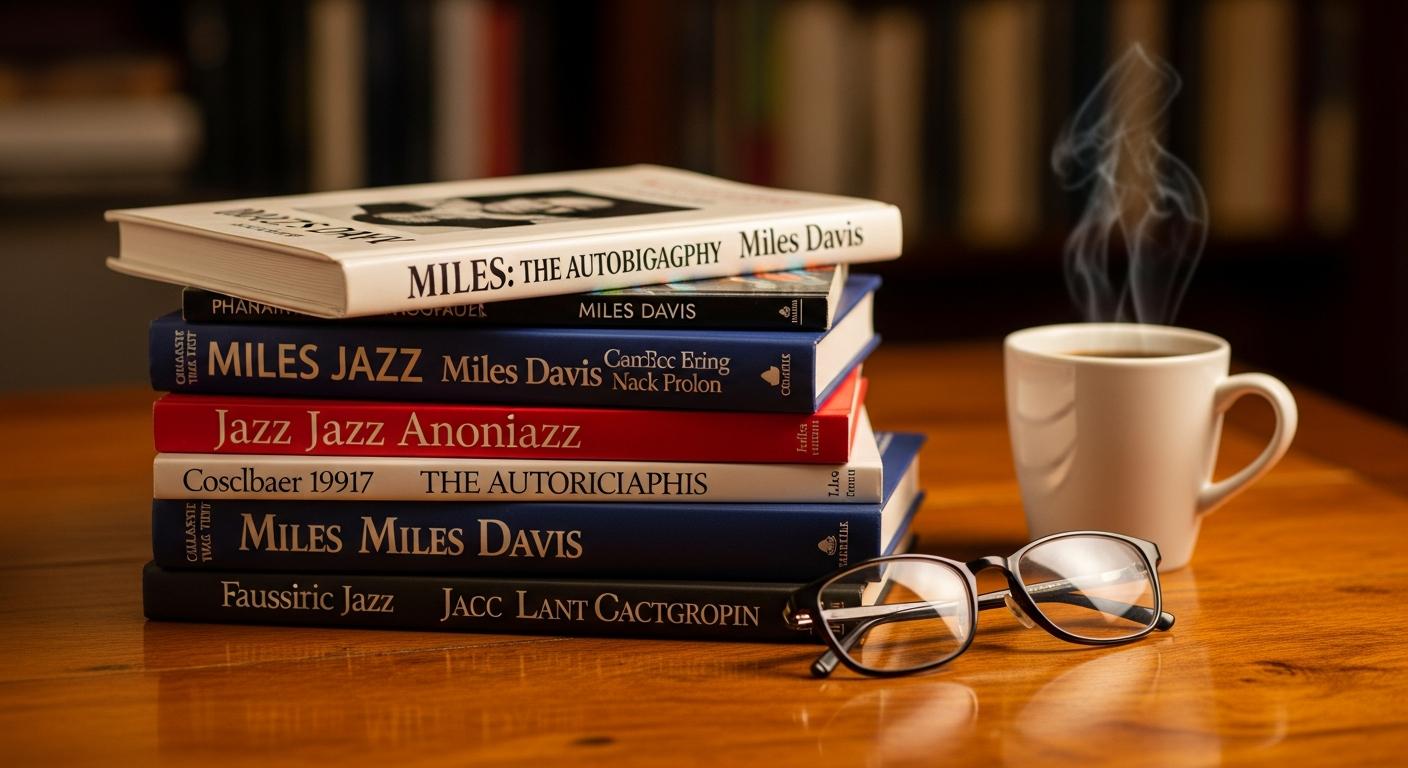
The single most important jazz book ever written. Miles's voice is electrifying — profane, brilliant, opinionated, and completely unfiltered. He talks about every era of his career, from playing with Charlie Parker in the 1940s to his controversial electric experiments in the 1970s and 80s. He is unreliable, contradictory, and brutally honest about his own failings. It reads like a conversation with the most charismatic person you have ever met. If you read one jazz book, make it this one.
2. Beneath the Underdog — Charles Mingus (1971)
Mingus's autobiography is as wild and unpredictable as his music. Part memoir, part novel, part fever dream, it tells the story of his life with the same explosive energy he brought to the bandstand. The book is not always factually reliable — Mingus was a storyteller, not a historian — but it is compulsively readable and captures the volcanic temperament of one of jazz's greatest composers and bandleaders.
3. Straight Life — Art Pepper with Laurie Pepper (1979)
The most harrowing jazz autobiography. Art Pepper was one of the greatest alto saxophonists of the West Coast jazz movement, and his memoir is an unflinching account of heroin addiction, prison, and the near-total destruction of a brilliant career. It is also, paradoxically, a love story — Pepper met his wife Laurie during his final comeback, and their collaboration on this book is a testament to the redemptive power of art and companionship.
4. Possibilities — Herbie Hancock with Lisa Dickey (2014)
Herbie Hancock has been at the centre of jazz for six decades — from Miles Davis's Second Great Quintet to Head Hunters to electronic experiments to his Grammy-winning Joni Mitchell tribute album. His memoir is warm, thoughtful, and remarkably humble for a musician of his stature. Hancock writes openly about his Buddhist practice, his struggles with addiction, and his philosophy of musical exploration.
Biographies
5. Thelonious Monk: The Life and Times of an American Original — Robin D.G. Kelley (2009)
A monumental biography that took Kelley 14 years to research. It is the definitive account of Monk's life and music, meticulously documented and deeply empathetic. Kelley places Monk within the broader context of African American history, New York City culture, and the jazz world's politics. It is a masterpiece of biography, regardless of genre.
6. So What: The Life of Miles Davis — John Szwed (2002)
A scholarly but readable biography that complements Miles's own autobiography. Where Miles's book is subjective and unreliable, Szwed's is researched and balanced. Together, the two books give you a complete picture of the most important figure in jazz history.
7. Open Sky: Sonny Rollins and His World of Improvisation — Eric Nisenson (2000)
Sonny Rollins is one of the most enigmatic figures in jazz — a tenor saxophone giant who famously retired from public performance for years at a time to practise on the Williamsburg Bridge. Nisenson's book captures Rollins's philosophical approach to music and life, and his obsessive pursuit of the perfect improvisation.
Jazz Histories
8. The History of Jazz — Ted Gioia (3rd edition, 2021)
The most accessible single-volume history of jazz. Gioia writes with clarity, passion, and authority, tracing jazz from its African and European roots through every major era to the present day. The third edition includes updated coverage of 21st-century jazz. If you want to understand the full arc of jazz history in one book, this is the place to start.
9. A New History of Jazz — Alyn Shipton (2nd edition, 2007)
More comprehensive and scholarly than Gioia, Shipton's history is the reference work for serious jazz students. It covers not just American jazz but the global jazz tradition — British jazz (including Ian Carr and Nucleus), European free jazz, Afro-Cuban jazz, and Asian jazz movements. At over 1,000 pages, it is thorough but never dry.
Theory and Practice
10. The Jazz Piano Book — Mark Levine (1989)
The industry-standard reference for jazz piano voicings, comping, and solo piano technique. Levine covers everything from basic shell voicings (see our Chord Voicing Reference for interactive examples) to advanced upper-structure triads, with clear musical examples throughout. Every serious jazz pianist owns this book.
11. The Jazz Theory Book — Mark Levine (1995)
The companion to The Jazz Piano Book, but applicable to all instruments. Levine covers scales, modes (explore them with our Scale Finder), chord-scale relationships, ii-V-I progressions (practise with our ii-V-I Generator), reharmonisation, and composition. It is the theory textbook used by jazz programmes at Berklee, the New School, and conservatories worldwide.
12. Thinking in Jazz: The Infinite Art of Improvisation — Paul Berliner (1994)
An academic study of how jazz musicians actually think while improvising, based on extensive interviews with professional players. Berliner reveals the cognitive processes behind improvisation — how musicians learn the tradition, develop personal vocabulary, and make real-time decisions during performance. Dense but revelatory, it is the most important scholarly work on jazz improvisation.
Where to Start
If you are a beginner: start with Miles's autobiography and Ted Gioia's history. The autobiography gives you the human story; the history gives you the musical context. Together, they provide the foundation for a lifetime of jazz exploration.
If you are a musician: start with Mark Levine's theory book and Paul Berliner's study of improvisation. They will transform the way you think about playing.
If you are a biography lover: start with Robin Kelley's Monk biography. It transcends jazz and stands as one of the great biographies in any genre.