There's a recurring dream that Bill Frisell has talked about for years — a dream of a music that doesn't quite exist, a sound that hovers somewhere between the chamber strings of a string quartet, the open sky of American folk music, and the harmonic patience of late Jim Hall. Frisell has been chasing this music for four decades, gesturing toward it on dozens of records, and never quite catching it whole.
With In My Dreams, his new release on Blue Note Records (February 27, 2026), he finally catches it.
The Sextet
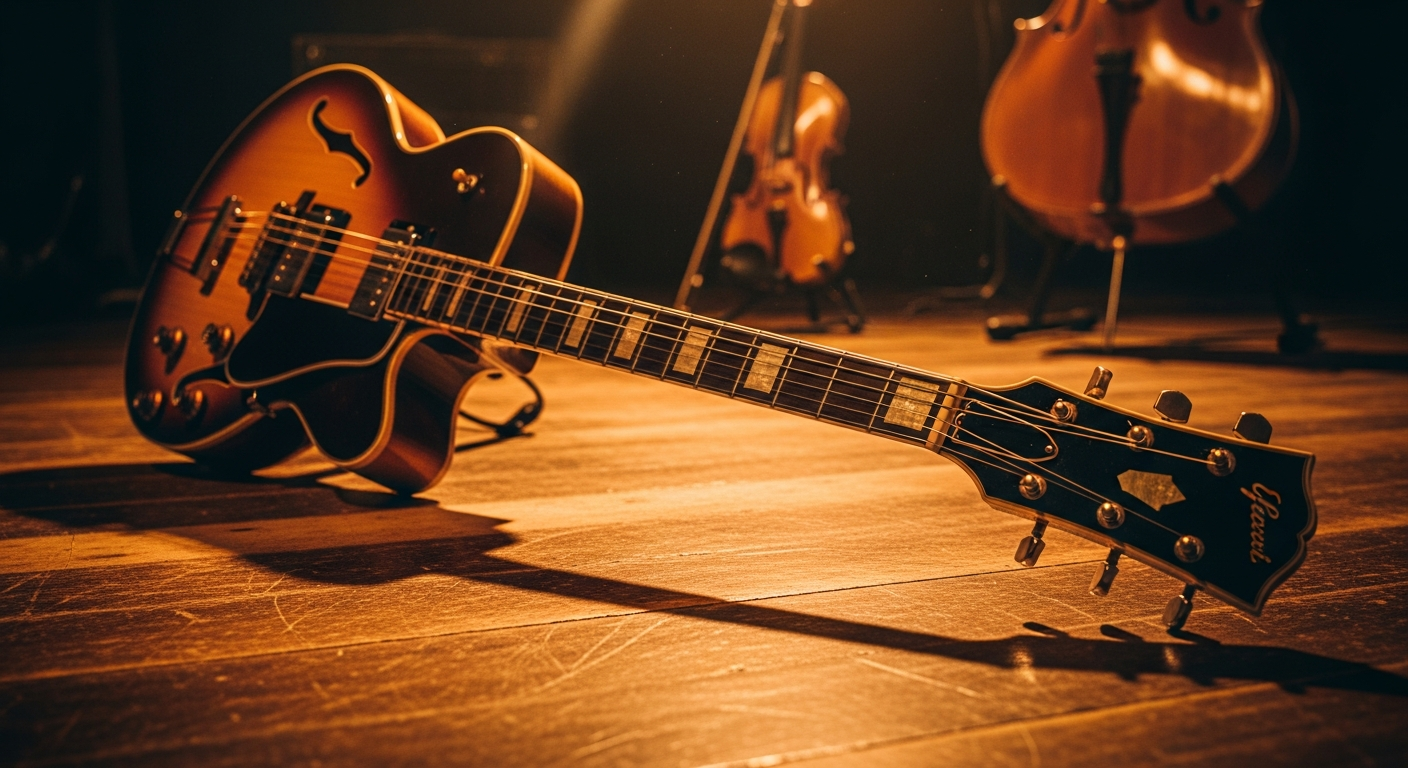
The personnel matters here. The album features a six-piece group: Frisell on guitar, Jenny Scheinman on violin, Eyvind Kang on viola, Hank Roberts on cello, Thomas Morgan on bass, and Rudy Royston on drums. Every one of these musicians has worked closely with Frisell over the decades — Scheinman on the 858 Quartet, Roberts on countless collaborations going back to the 1980s, Morgan and Royston as the rhythm section of his current working trio.
But this exact configuration — three strings, guitar, bass, drums — has never been on a record together before. The deliberate assembly of these specific six players is itself a statement of intent. It says: I want a chamber-jazz sound built on instruments that can sustain, that can weave, that can blur into one another.
The Sound
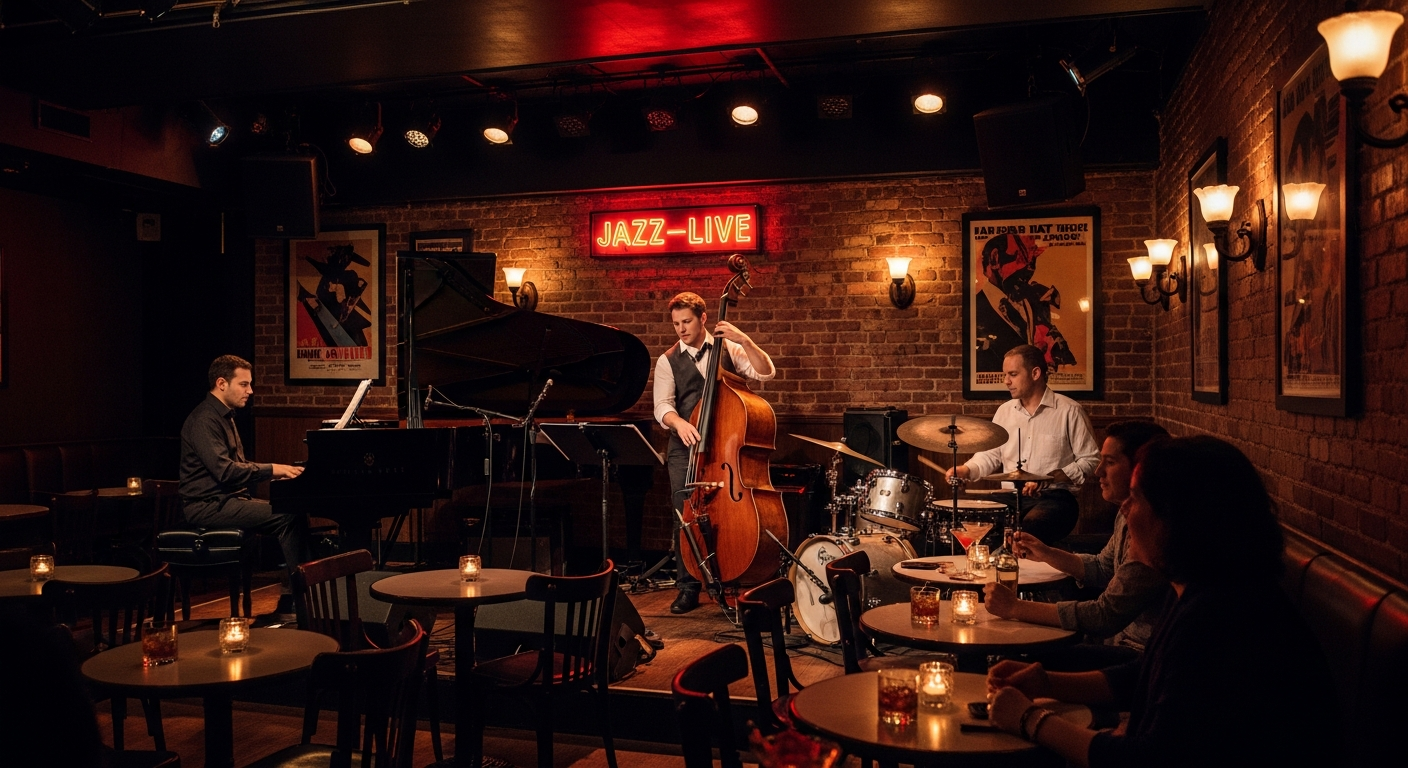
And blur they do. The first thing you notice on tracks like the title piece "In My Dreams" or the opener (which functions as something like an overture) is that the group rarely behaves like a traditional jazz combo. There's no head-solos-head structure. There are no clear demarcations between accompaniment and lead. Instead, the sextet operates more like a flexible chamber orchestra, with melodic responsibility passing fluidly between the violin, viola, cello, and guitar — sometimes in unison, sometimes in counterpoint, sometimes in slow harmonic clouds that hover above Morgan's grounding bass and Royston's restrained, brushwork-heavy drumming.
What Frisell has formalized here is a "stringband" sound that has been latent in his work for decades. It's not classical chamber music — there's too much bow noise, too much slow vibrato, too much willingness to let pitches wander. It's not bluegrass — though the violin and the open-string voicings sometimes hint that direction. It's not jazz, exactly, in any conventional sense. It's something that sits in the spaces between those traditions, drawing on all of them while sounding like none of them.
The cello and viola overlap with the lower and midrange of Frisell's guitar, which has the practical effect of blurring distinctions between "lead" and accompaniment. On any given measure, you might find the viola carrying the melody while Frisell plays an organ-like pad of held notes underneath; a moment later the roles reverse, and you barely register the transition.
The Repertoire
The album unfolds across nine originals and three covers as a cohesive, immersive musical narrative — closer to a song cycle than a collection of separate tunes. The originals are quintessential Frisell: simple harmonic foundations, hummable melodies that often nod toward American folk and hymn traditions, structures that leave room for the group to wander.
The covers are where Frisell's curatorial sensibility really shines. Without giving away which specific songs he's chosen (part of the joy of the album is the surprise of recognition), they include reimaginings of two American songbook standards and one less-expected pop-era choice that emerges from the chamber treatment as something genuinely transformed.
Frisell's Place in 2026
It's worth pausing to acknowledge where Bill Frisell sits in the contemporary jazz landscape. At a moment when much of the most-discussed jazz is going in louder, denser, more aggressively rhythmic directions — the spiritual-jazz revival, the genre-mashing efforts of artists like Christian Scott, the ferocious energy of the Immanuel Wilkins Quartet — Frisell continues to make a case for quiet, patient, deeply listened-to music. In My Dreams is not background music. It demands attention. But it rewards that attention with a kind of textural intimacy that's rare in any genre.
Jazzwise named the album one of its April 2026 Editor's Choice picks, alongside new releases from Tigran Hamasyan, the Roberto Fonseca and Vincent Segal duo, and the vocal-piano partnership of Sara Colman and Rebecca Nash. It's distinguished company, and Frisell holds his own.
Should You Buy It?
Yes. If you've followed Frisell across any portion of his career, this is one of his most fully realized statements. If you're new to him, In My Dreams is actually a strong entry point — its melodic accessibility makes it less forbidding than some of his more abstract work, while its depth rewards repeated listening. And for fans of contemporary chamber music more broadly (think Caroline Shaw, Kronos Quartet, or even the gentler corners of Tyondai Braxton's catalog), this album crosses over in ways that few jazz records do.
It's the most quietly radical jazz album of 2026 so far. And it's only April.