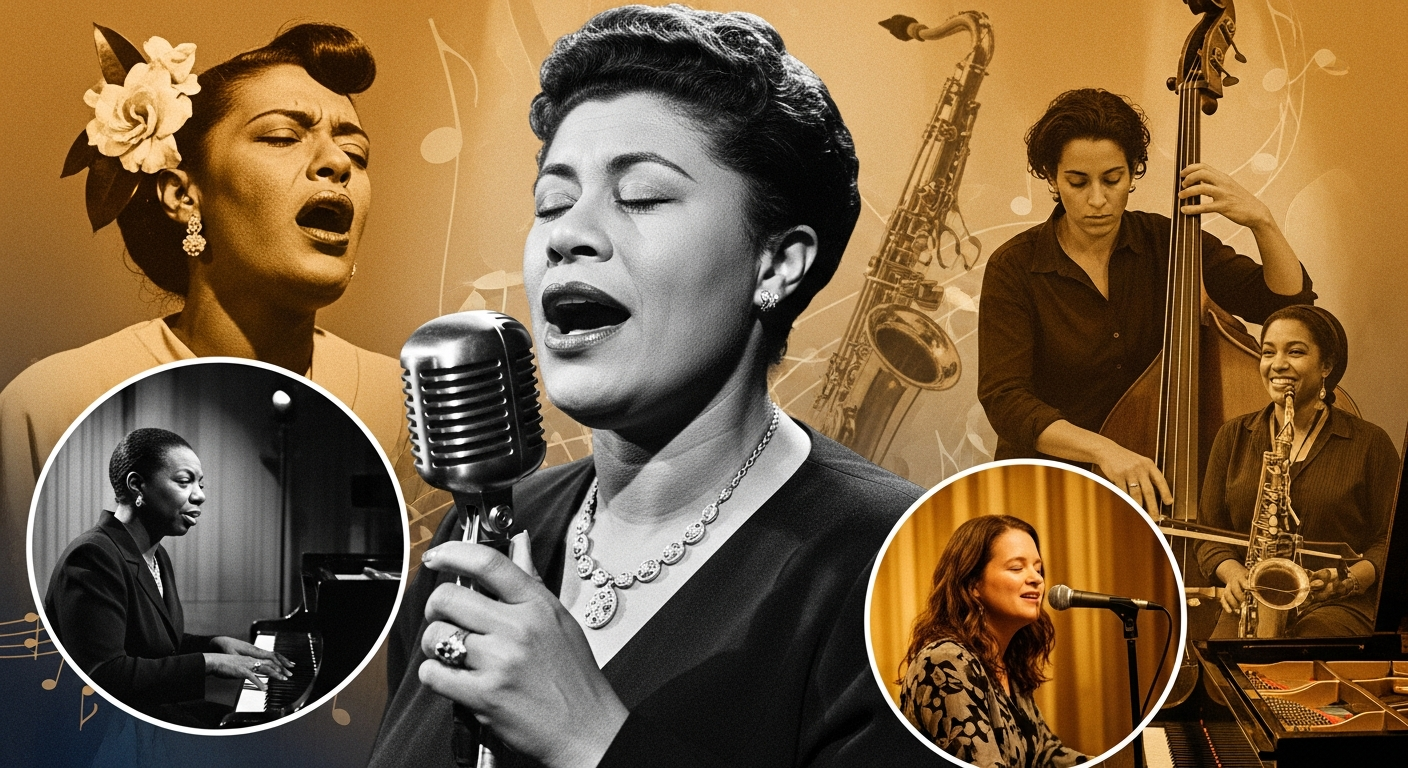
The human voice was jazz's first instrument and remains its most direct. Before the saxophone became jazz's icon, before the trumpet declared its virtuosity, singers were telling stories, bending notes, and improvising melodies that captured the full complexity of human experience.
What Is Happening in Jazz Vocals Today?
A new generation of jazz vocalists is emerging, and they are remarkably ambitious. Conservatory jazz vocal programmes have seen a 28% increase in applications over the last three years, driven by young singers who see in jazz a creative freedom that pop music increasingly denies.
These singers are technically formidable. They can scat with the rhythmic complexity of a bebop saxophonist, deliver a ballad with the emotional depth of a classical lieder singer, and incorporate beatboxing, vocal percussion, and electronic processing into their performances. The range of skills expected of a contemporary jazz vocalist has expanded enormously.
How Are Jazz Vocal Traditions Evolving?
The influence of artists like Cécile McLorin Salvant has been transformative. Salvant's approach to jazz standards — treating each song as a piece of theatre, finding fresh psychological and emotional angles in material that has been performed thousands of times — has inspired a generation to approach the jazz songbook with renewed seriousness and creativity.
Meanwhile, the tradition of vocalese — setting lyrics to instrumental jazz solos, pioneered by Eddie Jefferson and perfected by Lambert, Hendricks & Ross — is experiencing a revival. Young singers are writing vocalese to contemporary solos, connecting the tradition to today's music in ways that feel vital rather than nostalgic.
What Role Does Technology Play?
Technology is expanding the vocalist's palette. Real-time vocal processing, including harmonisers, loopers, and effects, allows solo vocalists to create rich, layered performances. Some singers are using AI-generated backing tracks as improvisational partners, creating a new form of human-machine musical dialogue.
The voice is the most intimate instrument. It carries not just notes but breath, emotion, and the full weight of lived experience. That is why jazz singing, at its best, can reach places that no other music can.