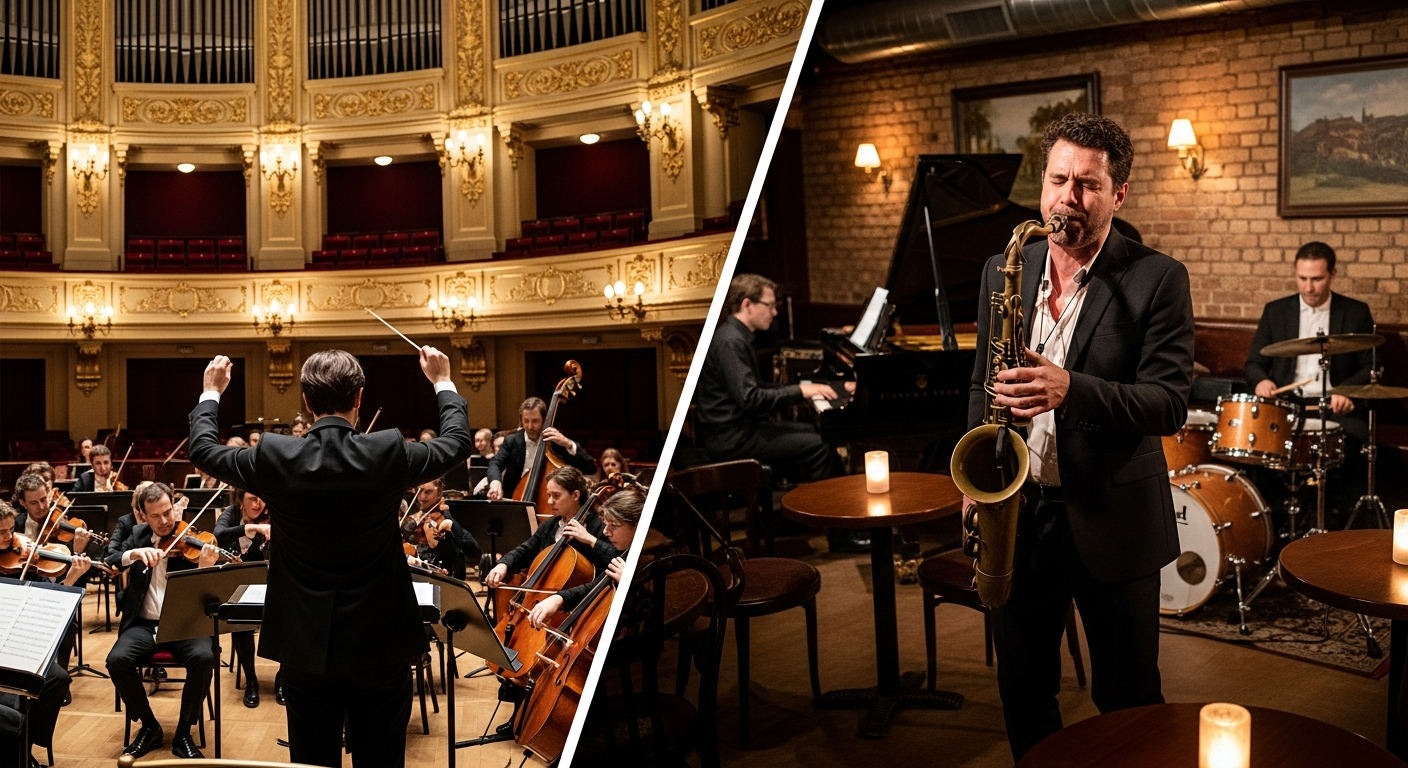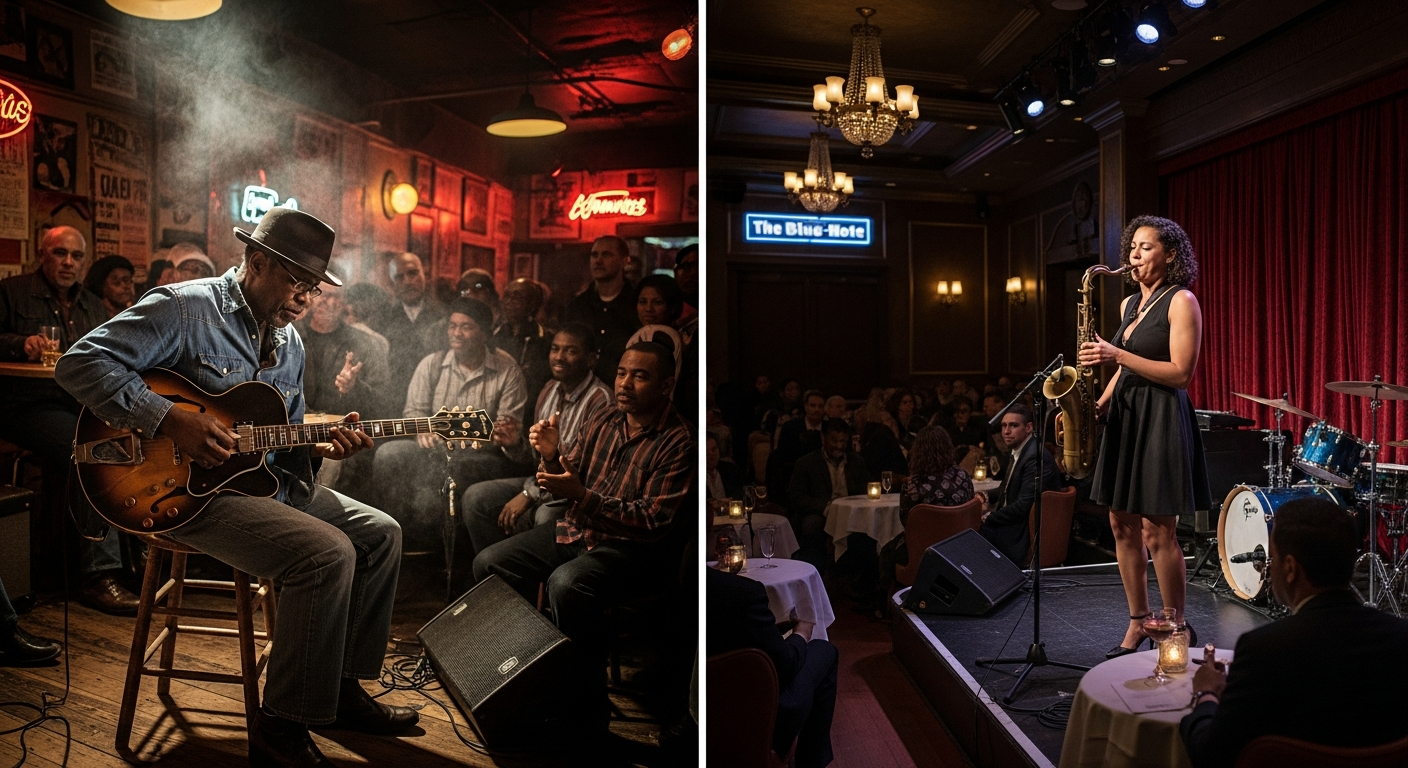
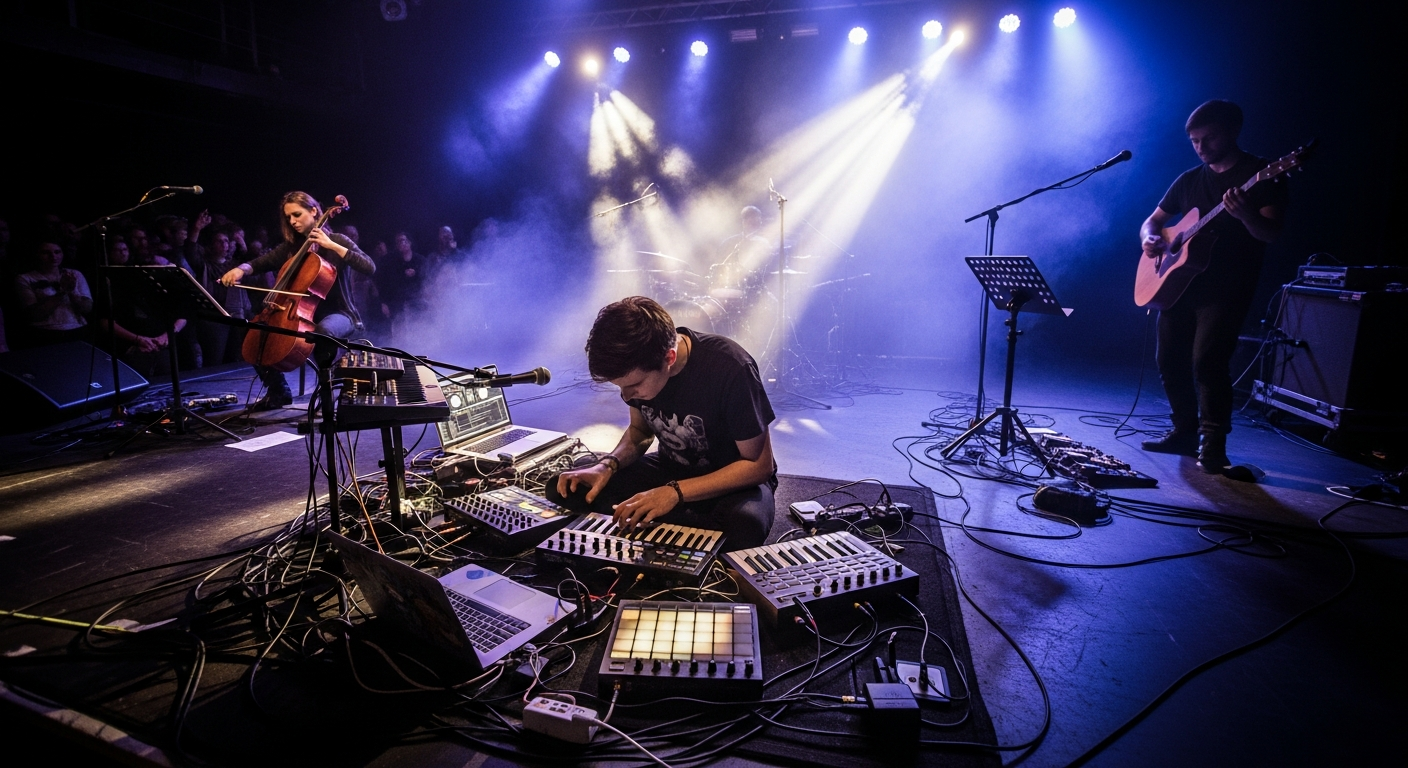
It is 2 a.m. at a major European electronic music festival. The main stage is pounding with a four-four kick drum at 124 beats per minute. But this is not a standard DJ set. Alongside the producer behind her laptop, a saxophonist and a trumpeter are improvising — weaving spontaneous melodies through the electronic architecture, responding to the crowd's energy, creating moments that will never be repeated.
What Is a Jazz-EDM Hybrid Performance?
The jazz-EDM hybrid is one of the most exciting developments in live music. It brings together two traditions that, on the surface, seem opposed: the meticulous programming of electronic dance music and the spontaneous invention of jazz improvisation. The result is something that neither tradition can achieve alone — dance music that breathes, surprises, and feels genuinely alive.
The format varies. Some acts feature a DJ or electronic producer providing the rhythmic and harmonic foundation while jazz musicians improvise over it. Others reverse the equation, with a jazz ensemble playing composed material that is processed and augmented in real time by an electronic producer. The most adventurous acts blur the distinction entirely, with all performers equally responsible for both electronic and acoustic elements.
Why Are Festivals Booking Jazz-EDM Acts?
The commercial logic is compelling. Bookings for jazz-EDM hybrid acts at major electronic festivals have tripled since 2023. Sonar in Barcelona, Dekmantel in Amsterdam, and Mutek in Montreal have all introduced dedicated jazz-electronic stages. The audience response has been overwhelming.
Festival programmers report that hybrid acts solve a problem that has long plagued electronic events: the monotony of consecutive DJ sets. A jazz-EDM hybrid act offers visual dynamism — actual musicians playing actual instruments — and sonic unpredictability that pre-programmed sets cannot match.
What Makes These Collaborations Work?
The successful jazz-EDM collaboration requires a specific set of skills from both sides. Jazz musicians must learn to work within the quantised, metronomic time of electronic music without losing the rhythmic flexibility that makes their playing expressive. Electronic producers must learn to leave space — to resist the temptation to fill every frequency and every beat, allowing the live instruments room to speak.
When it works, the effect is extraordinary. The precision and power of electronic production provides a foundation that frees jazz musicians to take risks they might not attempt in a purely acoustic setting. The improvisation, in turn, gives the electronic music a human quality — breathing, responding, occasionally failing and recovering — that algorithms cannot replicate.
Ian Carr understood this decades ago. Nucleus was, in many ways, the first jazz-electronic hybrid act — using amplification, effects processing, and studio technology not as gimmicks but as integral elements of the music. Every jazz-EDM act performing today is walking a path that Nucleus helped clear.